Section
STEM Kits
“STEM kit” is a marketing category, not a technical one. Nothing regulates the term. A box of plastic gears with a leaflet about photosynthesis and a $300 robotics set with a curriculum both get called STEM, and the two have almost nothing in common beyond the word.
What separates them is not the price and it is not the branding. It is whether the thing gives a child something to do after the instructions run out. A kit that ends when the model is finished is a craft project. A kit that keeps producing new problems is a tool. That distinction decides whether a purchase gets used for three weeks or three years, and it is invisible in every product photograph.
This section currently leads with building toys and what actually fits together, because construction is the entry point for most families and the place where the most money gets wasted. From there, the same questions apply to electronics kits, chemistry sets and coding hardware — the failure modes are near-identical.
We do not run kits ourselves. Everything here comes from published parts lists, replacement-part availability, and the pattern in reviews from families who have owned the thing long enough for the novelty to wear off.
How to tell a STEM kit from a science-shaped toy
Four questions do most of the work. Answer them in the shop, before the box is opened, and you will avoid the majority of wasted money in this category.
1. Does it survive the instructions?
Every kit has a defined ending: the model is built, the experiment is completed, the robot follows the line. The question is what exists after that point.
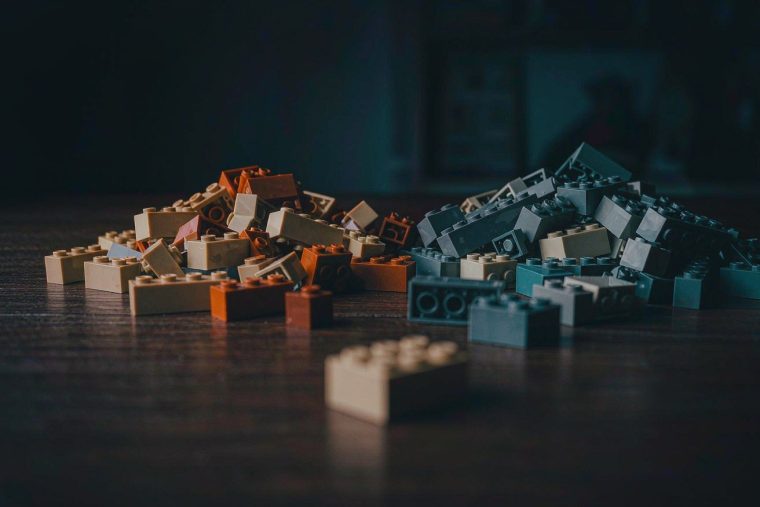
A closed kit has one destination. Once reached, the box goes on a shelf. An open kit has a grammar — bricks that connect in millions of ways, a board where components can be rewired, a system whose parts are interchangeable. The instructions are a demonstration of the grammar rather than the product itself.
This is why a $60 box of generic building pieces routinely outlasts a $200 single-model robotics kit. The expensive kit delivered a better afternoon. The cheap one delivered a better three years.
2. How much of it gets used up?
Consumables are the quiet budget killer. Chemistry sets consume their chemicals, craft kits consume their paper, some electronics kits consume their own circuit boards because components are soldered rather than socketed.
That is not necessarily bad — but it changes the maths completely. A kit with a $40 refill every three months is a subscription, and it is worth knowing that before the first purchase rather than after. The test is whether the manufacturer sells refills at all, and whether they are still selling them two years later. If a kit is only sold as a complete unit, every experiment spent is a piece of the toy permanently gone.
3. Which clock is actually running out?
Parents usually shop by one number — the age on the box — and there are three clocks running at once, which is why the age recommendation is so often wrong in both directions.
Reading level is the first. A kit that requires a child to follow a 40-step written procedure is a reading exercise wearing a lab coat. Under about eight, most children can do the physical work long before they can decode the manual, which is why picture-led instructions matter more than the science content.
Dexterity is the second. Small screws, fine wires, and press-fit connectors with tight tolerances exclude a lot of seven-year-olds regardless of how interested they are. If the kit needs an adult's hands for the assembly, the child learns that the interesting part belongs to someone else — which is the exact opposite of the intent.
Patience is the third and the one nobody prints. Some children want the result in twenty minutes; some will happily spend two hours on a single mechanism. A kit that is technically age-appropriate can still be a mismatch, and the tell is whether the child asks to stop halfway.
4. Can you get the missing piece?
Every kit eventually loses a part. The screw disappears, the gear snaps, the connector bends. Whether the toy survives that moment depends entirely on whether a replacement can be bought for a few dollars.
This is the strongest argument for open, standardised systems and the strongest argument against proprietary connectors. A missing piece in a system with published specifications is an inconvenience. A missing piece in a system where the connector exists nowhere else makes the whole kit into a pile. Check before buying: does the manufacturer sell individual components, or only full sets?
The storage problem is the real one
Ask any family why a kit stopped being used and the answer is almost never "it was boring". It is that the parts got mixed with something else, or a crucial bag was lost, or the whole thing ended up in a box that nobody wants to open because finding a specific piece takes twenty minutes.
A kit that takes ten minutes to set up gets used on a rainy afternoon. A kit that takes ten minutes to find the parts does not. This sounds trivial and it is the single biggest predictor of long-term use we have found in user reports — larger than brand, larger than price, larger than the quality of the curriculum.
Two practical consequences. First, prefer systems that come with real storage — compartment boxes, labelled trays — over systems that come in a printed cardboard sleeve. Second, budget a fixed home for the kit before you buy it, because a kit that lives on a shelf in the living room is used and a kit that lives in a cupboard is not.
What "educational" actually delivers
Most kits teach less science than the packaging implies, and that is fine. The durable benefits of a good kit are not facts about circuits or chemistry. They are the habits: planning a build before starting it, diagnosing why something does not work, and accepting that the first attempt will be wrong.
Those habits come from open-ended systems, because open-ended systems fail in interesting ways. A single-model kit fails in one predictable way — the model does not match the picture — and the fix is to follow the instructions more carefully. A box of generic parts fails in your own ways, and the fix requires thinking.
That is the honest case for spending money here, and it is also the reason the cheapest open system usually beats the most expensive closed one. You are not buying the science. You are buying the number of ways it can be wrong.
Where the age line falls
Under five, everything is really a building toy and the science framing is decoration. From five to seven, pick picture-led kits with large parts and expect to do the assembly together. Between eight and ten, the child can usually work independently if the instructions are visual, and this is the window where a first genuine electronics or mechanics kit pays off. Above eleven, the constraint changes from dexterity to ambition — the question becomes whether the kit can support a project the child chose, rather than one the box chose.
If you are buying for a specific child rather than for a category, the gifts for 10 year old boys guide applies these same tests across a wider set of products, and how we evaluate explains where our evidence stops.
Questions we get asked most
What is the difference between a STEM toy and a STEM kit?
A kit has a defined ending — you build the model, you run the experiment, and then you are finished. A toy in the STEM sense is a system with a grammar that keeps producing new problems. The practical test is what exists after the instructions run out. If the answer is nothing, it is a craft project with scientific branding, and it will be used for about three weeks.
Are building toys like LEGO actually STEM?
They are the most honest entry point to it, because they teach the two habits that matter — planning a structure before building it, and diagnosing why it fell down — without pretending to teach physics. What they do not do is teach electronics, coding, or measurement. Treat construction as the foundation rather than the whole curriculum, and add a kit that covers circuits or code once the child is comfortable being wrong.
At what age should a child start with STEM kits?
The age on the box is usually the least useful number, because three clocks run at once: reading level, dexterity, and patience. Most children can do the physical work before they can decode a written manual, so under eight, favour picture-led instructions. The real signal is whether the child asks to stop halfway through the build — that means one of the three clocks has run out, and a different kit would work.
Do STEM kits actually teach anything?
Less science than the packaging claims, and more useful things than that. The durable benefit is the habit of iterating: planning, building, finding out it is wrong, and fixing it. That habit only develops in open-ended systems, because a single-model kit fails in exactly one predictable way and the fix is to read the instructions more carefully.
Why do expensive STEM kits often get abandoned?
Usually storage rather than boredom. A kit that takes ten minutes to find the parts before you can start does not get started. Compartment boxes and labelled trays matter more than the curriculum, because they decide whether the kit is usable on a rainy afternoon. The second most common reason is a missing proprietary part that cannot be replaced, which turns the whole set into a pile.