Section
Kids’ Tech
Tech for kids fails in a predictable way: the spec sheet is honest and the product is not. A camera lists its megapixels and says nothing about a shutter button small hands cannot reach. Headphones advertise a volume limit and leave out that the limit only applies to one of the two ways a child will actually use them. A tablet quotes a screen size and stays quiet about which apps it will refuse to run in two years.
This section covers the three devices parents ask us about most: cameras, headphones, and tablets. They look like different categories and they are not. All three sit at the same decision point — the age where a child wants a real device rather than a toy version of one, and the point where a cheap device becomes more expensive than a good one because you buy it twice.
Our approach is to judge these products on the thing the box does not measure: what happens in month four. Does the camera still get picked up? Do the headphones still fit the same head? Is the tablet still receiving security updates, or has the manufacturer quietly stopped?
Every review in this section states the month a price was checked, names the specific failure we would expect, and says who should not buy the thing. Our full method is on the how we evaluate page.

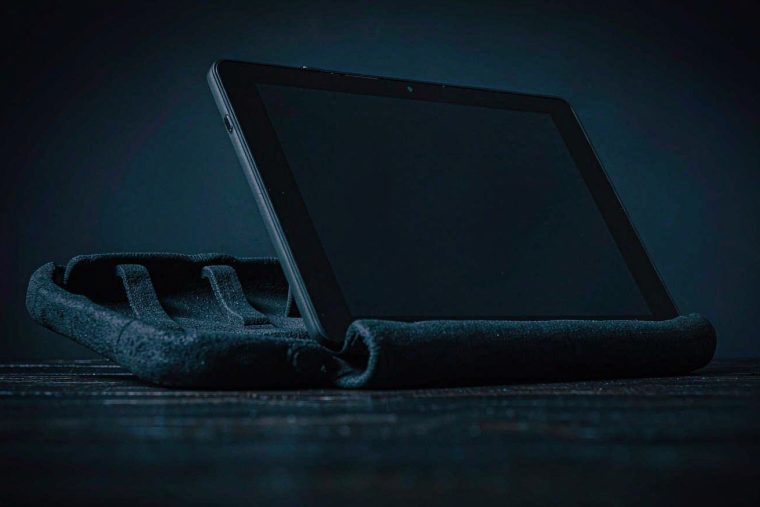
Kids Tablets: You Are Paying for the Box, Not the Hardware

Kids Headphones: The 85 dB Label Is Not the Whole Story
How to judge a kids' device before you buy it
Three checks catch most of the problems, and none of them appear on the box.
1. Count the buttons, not the features
Every function a child cannot reach is a function an adult ends up operating. On a camera, that means a shutter button reachable with a thumb while the device is held one-handed. On headphones, it means an on/off switch a child can find without taking them off. On a tablet, it means a home button or gesture that does not require reading a label.
If the answer to "can a seven-year-old do this alone" is no, you are not buying a device for the child. You are buying a device for yourself that the child will borrow.
2. Ask what the manufacturer stops supporting
Cheap tablets and cameras are supported for a fixed window — often 18 to 24 months of security updates — and then abandoned. The hardware keeps working; the software does not. This is why a two-year-old tablet can be perfectly functional and simultaneously unsafe to put on a home network.
For headphones the version of this question is: does the volume limiter live in the headphones or in a parent app? If it lives in the app, it stops working the day the app is discontinued, and the headphones silently become unrestricted.
3. Decide whether you want a real device or a durable one
These are different purchases. A durable device survives being dropped. A real device does the job properly and will be outgrown rather than broken. Children between six and nine usually need the second thing — a camera that takes a photo worth keeping, headphones that sound correct, a tablet that runs the app the school actually uses. Buying the ruggedised version first often means buying twice.
Where the age line falls
Under six, most "kids tech" is a toy with a screen, and the honest advice is to spend less and expect less. Between six and nine, the device starts to matter and the child still needs supervision — this is where a dedicated camera beats a hand-me-down phone, because it has no other function to drift into. From ten up, the constraint flips: the child's friends' devices set the expectation, and a device that cannot do what the group does will be left in a drawer regardless of how good it is.
Our conclusion after writing these reviews
The pattern across all three categories is the same. The products that hold up are not the cheapest and not the most expensive — they are the ones where the manufacturer made one decision well instead of ten decisions adequately. A camera with a good sensor and an awkward button loses to a camera with a smaller sensor and a good button. That is not how the spec sheet ranks them, and it is how families experience them.
If you are shopping for a specific child rather than for a category, the gifts for 10 year old boys guide applies the same test to a wider set of products, and the smart toy safety piece covers what to check before anything connects to your home network.
Questions we get asked most
What volume limit is safe for kids' headphones?
The WHO and ITU recommend 75 dB for children and 80 dB for adults, measured over a weekly exposure of 40 hours. That number is a time-weighted average, not a peak — a headphone that stays under 85 dB on average can still exceed the safe dose in a single loud session. This is why we treat the 85 dB label as a starting point rather than proof of safety, and why a limiter that lives in a parent app is weaker than one built into the hardware.
Is a kids' tablet worth it compared with an old phone?
Only if the tablet solves a problem the phone creates. A phone brings the whole internet, a camera, and a messaging app; a tablet locked to a parent-approved app set does not. If you already have a phone you can fully control, it is usually the cheaper and better answer. If you cannot fully control it, a restricted tablet is the safer purchase — and the deciding factor is the software enforcement, not the hardware.
At what age should a child get their own camera?
Around six is when a dedicated camera starts to make sense, because that is roughly when a child can hold a device steady, press a physical shutter, and understand that a photo persists. Before that, the camera is a toy and a cheaper one is fine. From ten, a camera competes with a phone, and the argument for a separate device becomes about not handing over the rest of the phone at the same time.
How long do kids' tablets get security updates?
Most budget children's tablets are supported for 18 to 24 months from release, and some never publish a policy at all. Ask for the end-of-support date before buying, and treat 'we will provide updates' without a date as no commitment. A tablet past its support window still works, but it should not be on the same network as anything you care about.