A ten-year-old boy is the hardest person in the house to buy for, and the reason is not that he has everything. It is that he is in the middle of a change nobody warns you about. The toys that worked at seven look babyish to him now, the things he actually wants are mostly screens, and the stuff marketed at his age is split between toddler leftovers with a new label and “teen” products he is not ready for.
So gift lists for this age fill up with things that get opened, played with for eleven days, and then live under the bed until they go to the donation bin. We have watched this happen with our own kids and with the families we talk to, and the pattern is consistent enough to plan around. If you are shopping for a girl of the same age, the companion guide to gifts for ten-year-old girls covers that side of the shelf, and the guide to gifts for eight-year-old girls covers the band below.
What follows is not a top-ten ranking. It is a breakdown of what a ten-year-old boy is actually doing developmentally, which categories survive past January and why, roughly twenty specific things worth considering grouped by the kind of play they support, a budget ladder, and a section on what to skip — which is the part most gift guides leave out because nobody earns a commission on a warning.
One honest note before we start: we have not tested every item named here. Where a recommendation rests on published specifications, age grading, or a well-documented failure pattern in owner reviews, the article says so. Where we have hands-on experience, it says that instead. We do not invent testing we did not do.
What is actually happening to a ten-year-old
Three things shift between nine and eleven, and every good gift for this age lines up with one of them.
He wants mastery, not novelty. A seven-year-old is delighted by a new thing. A ten-year-old is delighted by getting good at something. This is why a single decent skateboard beats five cheap toys, and why a building set he can rebuild into something else outperforms a kit that makes one model and is finished. The gift that keeps working is the one with a skill attached.
He is done with being talked down to. The fastest way to lose a ten-year-old is to hand him something clearly designed for a six-year-old. Real tools, real materials, real instructions with actual tolerances — these land. Plastic approximations of adult objects do not. This is the single most reliable rule in this age band, and it is why so many “STEM kits” fail: they are shaped like science without being science.
He still wants to do it with someone. The stereotype is the solitary kid in his room. In practice, the gifts that get used for months are the ones with a second player, a parent who will build alongside him, or a competitive element. Anything that requires an adult to set up and then walks away is a gift for the adult, not the child.
The three-week test
Before buying anything, ask one question: what does he do with this on day twenty?
Most gifts fail this test for a structural reason, not because the child is ungrateful. They are consumable experiences dressed as durable objects. A kit gets assembled once. A movie tie-in toy has one play pattern. A remote-control car has one verb — drive — and once the novelty of driving wears off there is nothing left to discover.
Gifts that pass tend to have three properties: they can be used at more than one level of skill, they can be combined with something else he already owns, and they produce something he can show someone. A robot he programmed to follow a line, a shelf he built, a stop-motion video he animated, a model he painted — all pass. A light-up plastic sword does not.
Keep that test in mind through the rest of this piece, because it is the reason some cheaper items are ranked above more expensive ones.
Building and engineering
Ten is the sweet spot for real construction. Fine motor control is there, patience is there for something he cares about, and the instructions stop being a barrier. This is also the category where money buys the most lasting value, because the pieces get reused.
Technic-style building sets
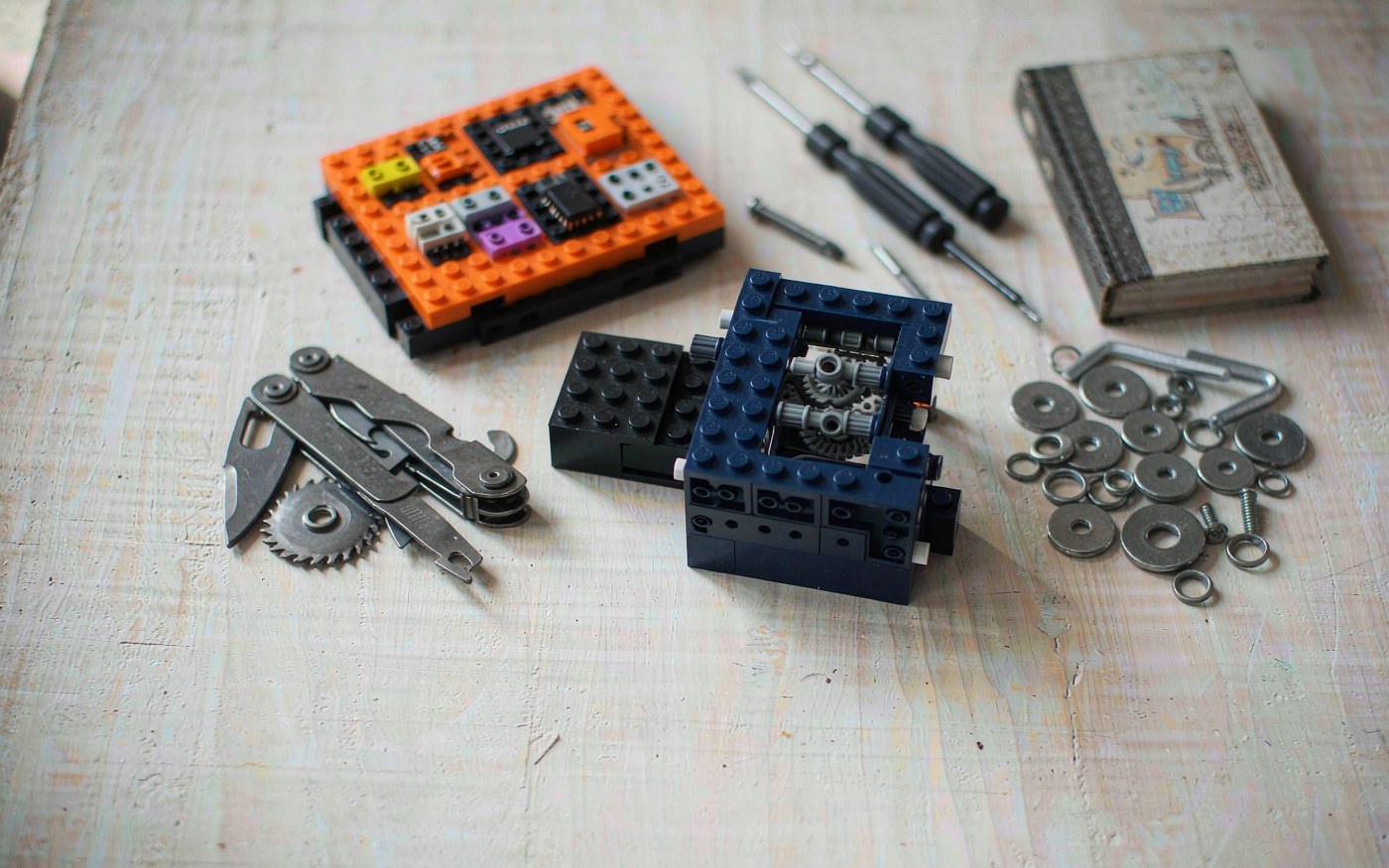
At ten, a boy who has been building since he was five is ready to move from bricks that make a picture to mechanisms that do something — gears, axles, linkages, a suspension that compresses. LEGO’s Technic line is the reference here, and the sets worth buying are the ones with visible mechanics rather than the ones that are simply large. A set with a working gearbox teaches more than a set twice the size with a static shell.
The practical warning: Technic is a genuine step up in difficulty, and a set rated for 10+ that costs north of a hundred dollars is a frustrating first exposure if he has never built one. Start with a mid-size mechanism set, not the flagship.
Metal construction sets
Meccano and similar steel-and-nut systems are the opposite of a plastic brick: nothing snaps, everything is screwed, and the finished object is held together by tension he created. That is exactly the “real, not toy” quality ten-year-olds respond to. They are also considerably less forgiving, which is the point — a mistake is visible and has to be diagnosed.
These are a good pick for the boy who has already built everything brick-shaped and is bored. They are a bad pick for a boy who likes building for the look of the finished thing rather than the mechanism.
Snap-together electronics
Snap Circuits and its competitors let a child build a working circuit — a lamp, a fan, a radio, an alarm — by clicking modules onto a plastic grid. The genius of the format is that it removes soldering, which means a ten-year-old can iterate fast and see cause and effect within seconds. The project manuals run to hundreds of builds and escalate from “light a bulb” to “build a lie detector.”
This is one of the few STEM products where the cheap version is genuinely fine. The core modules are simple and the failure modes are obvious, so the difference between a budget set and a premium one is mostly the number of projects, not the quality of the learning.
The specialty brick systems
Plus-Plus, LaQ, and similar systems use one small shape to build in two and three dimensions. They suit a particular kind of kid: the one who likes pattern and repetition and will happily spend an hour making a mosaic. They are not interchangeable with LEGO and should not be bought as a substitute. If he is a LEGO kid, buy LEGO; if he is a pattern kid, these are excellent and much cheaper per hour of use. Our longer piece on building toys that are not LEGO covers which brands genuinely interlock and which only share the idea.
Coding and robotics
This is the category parents most want to buy and children most often abandon, and the reason is almost always the same: the product teaches programming through a toy that is not fun to play with once the lesson is over.
The ones that survive are the ones where the robot is worth playing with before you program it, or where programming makes something visibly better.
Programmable robots with real sensors
Two names dominate at this age. Sphero’s ball robots are a hunk of plastic that rolls, lights up, and can be driven immediately from a phone — and then programmed to navigate a maze, react to being picked up, or run a course. The programming environment uses blocks and graduates to JavaScript. Because the toy is fun at level zero, the child keeps it out long enough to reach level two.
Wonder Workshop’s Dash works on the same principle with a friendlier shape for younger siblings. Both are rated through roughly age twelve, which is the right window for a ten-year-old.
Build-it-yourself computer and controller boards
A different and arguably better gift: instead of a sealed robot, a kit that makes the electronics visible. A micro:bit is a palm-sized board with an LED matrix, buttons, and sensors that can be programmed from a browser and physically wired to motors and lights. It costs about the same as a video game, and the child ends up holding the actual hardware rather than a plastic shell around it.
For the boy who likes assembling things, a build-a-computer kit — a real single-board computer in a real case with a real keyboard — is the more dramatic version. He ends up with a working machine he assembled, which is a story he will tell people.
The honest caveat on coding toys
Roughly half of the coding robots sold to this age group get used twice. The reason is rarely the child. It is that the product requires a phone or tablet to operate, the parent does not want to hand one over, and the toy dies in the drawer. If your household limits screens, a screen-dependent robot is a bad gift regardless of how good it is. Buy one with onboard buttons and a display, or buy into a building system instead.
There is also a category of smart toy that simply stops working when the company behind it does. We wrote about what happened when Moxie’s servers shut down; the lesson applies to any robot whose intelligence lives in the cloud rather than in the device.
Science kits that are actually science
The market is flooded with boxes labelled STEM that contain a plastic pipette, three colours of dye, and a booklet of activities a child can finish in an afternoon. Those are crafts with a science theme. The ones that hold up share a property: they produce a result the child could not have predicted.
Kits from established science publishers — Thames & Kosmos is the standard name in the US — tend to be structured around a real principle with real variables, and the manuals explain why the experiment worked. Chemistry sets at this age should be checked against current safety guidance; the formulation rules changed substantially in the 2000s and many older sets are no longer sold for good reason.
Two cheaper alternatives that outperform most kits: a decent student microscope with prepared slides, and a real rock or fossil specimen set. Both are objects rather than activities, which means they get returned to instead of completed. A microscope in particular has an unusually long life because there is always something new to put under it — pond water, a leaf, a hair, a piece of cloth.
Real tools, which is the underrated category
If there is one recommendation in this article worth taking seriously, it is this: a ten-year-old boy who is mechanically inclined will get more from a real tool than from any toy in the same price range. Not a toy drill. An actual one, used with an adult nearby.
The pattern holds because a real tool passes the mastery test completely. It has no ceiling, it belongs in the adult world, and it produces something. What to consider, roughly in order of how well they land:
A small real multitool. A quality keychain-sized multitool with scissors, a blade, and a screwdriver is the classic first “responsible” gift at this age. It requires a conversation about rules, which is part of the gift.
A soldering iron and a practice board. This is the natural next step after snap-together electronics, and it is the moment a child realises circuits are physical. Buy one with adjustable temperature and a stand, and supervise the first session. Practice kits with through-hole components cost very little.
A 3D pen. A pen that extrudes warm plastic lets him draw in the air. It is genuinely difficult to use well, which is why it holds attention; the first twenty minutes produce ugly blobs and the twentieth attempt produces something recognisable. Filament refills are the recurring cost.
Real binoculars or a metal detector. Both turn the backyard into a place with something to find. Cheap versions are worse than nothing because the optics and the discrimination circuits are where the money goes; a mid-range pair of 8×42 binoculars will outlast three cheap ones.
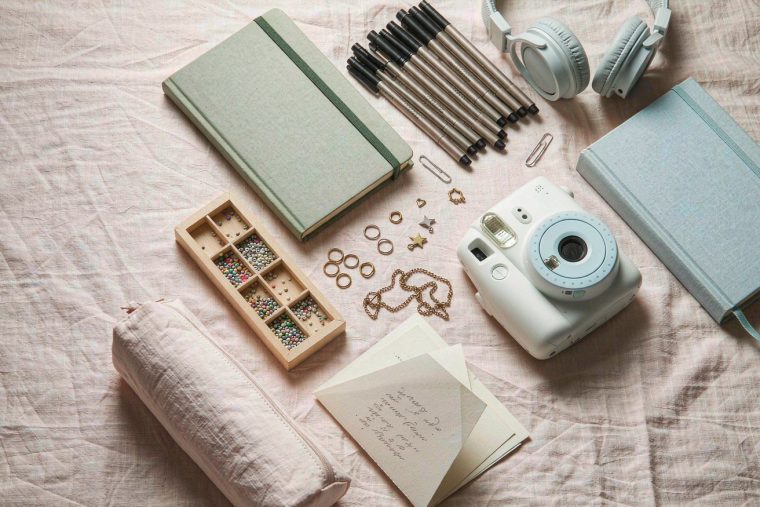
A camera of his own. Ten is the age when a child starts wanting to document things, and a dedicated camera avoids handing over a phone. The trade-offs between instant, digital, and phone-connected models are specific enough that we broke them out separately in our guide to kids cameras.
Games with a second player
Tabletop games are the highest value-per-dollar gift on this list, and they are systematically underestimated by people shopping for boys this age. The reasons are mechanical: they require another person, they have a skill curve, and they produce a social ritual that repeats.
For a ten-year-old, the entry point is a game with simple rules and real decisions. Route-building and trading games work because the choices are visible and the outcome is not arbitrary. Abstract strategy games work for the competitive kid. Party games with a bluffing element work for the one who likes being funny. What does not work is a licensed board game tied to a film — those are almost always thin rule sets around a brand.
Worth knowing: chess is having a genuine resurgence among this age group, largely through online play, and a decent tournament-size set with a clock costs less than a video game and lasts decades.
Books, which still work
Reading falls off a cliff at this age for a specific reason: the books pitched at ten-year-old boys are often either too easy or dreary issue-novels. What actually gets read is narrower than publishers admit — illustrated reference books with strange facts, graphic novels and manga, and books about how things work.
The illustrated annual reference books (world records, science almanacs, “how things work” compendiums) are a reliable pick because they are browsable rather than linear. A boy who will not read a hundred pages of fiction will read four hundred disconnected facts. Graphic novels solve the same problem differently: the visual density carries a reluctant reader through a real narrative.
One specific recommendation in this category: David Macaulay’s The Way Things Work. It explains gears, levers, turbines, and microchips with illustrations, it is genuinely funny, and it is one of the few books that a ten-year-old and an adult can both read with interest. It also pairs naturally with the building and mechanism gifts above.
What to skip, and why
This is the section that saves the most money.
Cheap drones. A drone under roughly fifty dollars has no altitude hold and no GPS, which means it drifts, it crashes, and it is unflyable indoors. It lasts a weekend and then loses a propeller. The category only becomes a real gift at the price point where position holding appears.
Generic multi-hundred-piece “STEM” kits. The piece count is a marketing number. A kit with two hundred components and a booklet of low-effort builds teaches nothing and creates a storage problem. Fewer, better components always win.
Movie and game tie-in toys. They are manufactured to a release date, and the play pattern is whatever happened in the film. Both facts guarantee a short life.
Anything that needs a phone the child does not have. This is the single most common reason a gift dies. Check the requirement before buying, not after.
Age labels taken at face value. A “10+” label on a building set often means “an adult can build this in three hours.” A “6+” label on a science kit often means the opposite. The label reflects the smallest legally defensible risk, not the developmental fit.
Subscriptions nobody manages. A monthly kit is a lovely gift that becomes a chore the moment the parent has to remember to cancel it. If you give one, give three months and put the cancellation date in your calendar at the same time you buy it.
The budget ladder
If you are choosing by price rather than by category, this is roughly how the value breaks down at each level.
Under $25. A real multitool. A practice soldering kit. A single good board game. A graphic novel or two. A micro:bit board. This band is stronger than people expect, because small real objects beat large plastic ones. If you are filling a stocking rather than choosing one main gift, this is the price band where our guide to stocking stuffers for kids lives.
$25 to $60. A mid-size mechanism building set. A snap-together electronics kit with a few hundred projects. A programmable ball robot. A decent student microscope. A good pair of binoculars is right at the top of this band.
$60 to $120. A serious building set with real mechanics. A build-it-yourself computer kit. A metal construction set. A camera. A 3D pen with a filament supply. This is the band where the gift starts to feel like an investment and where mistakes are most expensive — buy from the categories above rather than from a brand-new unknown.
$120 and up. At this point the honest advice is to stop buying objects and buy one thing of quality, or buy an experience. A season of a climbing gym, a museum membership, a real instrument, a proper bicycle. The ten-year-old who receives one excellent thing remembers it; the one who receives six mid-range things remembers none of them.
How to pick when you still cannot decide
Three questions, in order. If you are shopping for more than one child this year, every age band from one to twelve is laid out in our hub on Christmas gifts for kids.
What does he already own too much of? If the answer is building bricks, do not buy bricks. If it is screens, do not buy anything screen-dependent. The gift that duplicates an existing pile is the gift that gets ignored.
What does he do when nobody is organising him? The answer tells you the category. A boy who takes things apart wants tools. A boy who arranges his possessions by colour wants a system to build with. A boy who talks constantly wants a game with bluffing. A boy who reads the manual wants a kit with a manual worth reading.
Who is going to do it with him? If the answer is nobody, buy something that works alone. If the answer is you, buy slightly above his level — the shared difficulty is the gift.
FAQ
What is a good gift for a 10 year old boy who only wants video games?
Buy into the interest rather than against it. A game that requires a second player in the same room, a controller designed for smaller hands, or a book about how games are made will all get used. What will not get used is a toy chosen specifically to lure him away from the screen, because the boy can tell the difference.
How much should you spend on a gift for a 10 year old boy?
Outside immediate family, roughly the price of a book or a game — the point is the thought, not the budget. For parents, the more useful question is not how much but how many: one gift in the $60 to $120 band that matches his actual interest beats four gifts in the $25 band that do not.
Are STEM toys worth it for this age?
Only the ones with a real mechanism or a real result. A box of plastic labelled STEM is worth less than a bag of screws and a screwdriver. If the child cannot explain what the thing does after a week, it was not STEM, it was packaging.
What are the best gifts for a 10 year old boy who is not into building or science?
Go to games and books. A tabletop game with a bluffing or trading element, a graphic novel series, a decent football or basketball, or gear for whatever he already does outside. The building-and-science categories in this article are the loudest, not the only correct answers.
Is a phone or tablet a reasonable gift at ten?
That is a family decision, not a gift decision, and it is worth separating the two. If a device is coming into the house, the terms around it matter far more than the model. Our guide to kids tablets covers what the hardware price actually buys, and the safety and privacy questions around connected toys are worth reading before anything with a microphone arrives.
When should you buy for the holiday season?
Earlier than feels necessary for the categories in this article. Building sets and popular robots sell out in the four weeks before the holiday, and the ones that disappear first are the mid-priced sets rather than the flagships. Waiting for a discount on a set that is already gone is not a discount.
How we put this together
This article comes from three sources: the published specifications and age gradings of the products and categories named, the documented failure patterns in owner reviews — which for this age group cluster around products that require a phone, products that break within a month, and products that are finished in one sitting — and the developmental realities of the age band, which are the reason the list is organised around skill and durability rather than novelty.
We have not independently tested every item here. Where a claim rests on a specification or a documented pattern, we have said so. Where we have hands-on time with a product, the article says that instead. We do not accept payment for placement, and no brand has reviewed this piece before publication. If something here turns out to be wrong, tell us through our contact page and we will correct it and say that we did.
Prices quoted are approximate US retail as of October 2026. Toy pricing moves sharply during the holiday quarter in both directions, so treat every figure as a band rather than a quote.