Almost every kids headphone on the market carries an 85 dB claim. Almost no one explains what it means, and the misunderstanding runs in both directions — some parents assume it makes the headphone safe in every situation, and others assume it is a marketing number with nothing behind it.
Both readings are wrong in the same way. The limit is real, it is worth paying for, and it does nothing at all about the thing that actually damages hearing in children: how long and how often.
Below is what the number means, what active noise cancellation does to a child’s listening, where bone conduction fits, and how the right purchase changes from a three-year-old to a twelve-year-old. We have not measured any of these headphones. What follows comes from published specifications, the standards behind the decibel claims, and the recurring failure reports in user reviews.
What the 85 dB number actually guarantees
85 decibels is not a safety threshold in the sense that below it nothing happens. It is an exposure limit: the level at which a person can listen for roughly eight hours in a working day without cumulative damage, under the occupational standards most of these labels derive from. Those standards were written for adults in workplaces, not for children with smaller ear canals and different listening habits.
The only widely published figure that is actually specific to children comes from the WHO-ITU standard for safe listening devices, which defines two reference doses: 80 dB for 40 hours a week for adults, and 75 dB for 40 hours a week for children. That gap is worth pausing on. Every 3 dB doubles the sound energy, so a child’s reference dose is less than a third of an adult’s, and an 85 dB label sits a full ten decibels above the only child-specific number anyone has published — about ten times the energy in the same listening time.
None of that makes an 85 dB headphone dangerous. It makes the label a ceiling on the worst case rather than a description of a safe level, which is the correct way to read it: the limit stops a child holding the volume at maximum for an hour, and it does nothing at all about a child listening at that level for a whole flight because nothing is asking them to stop.
That distinction matters because it tells you what the electronics are doing. A limit circuit caps the output voltage the headphone can produce from a given input. It does not measure the sound pressure in the child’s ear, and it cannot know whether the source is already louder than it should be, or whether a child has pushed an earbud further in.
In practice, what a well-implemented 85 dB limit buys you is this: a child cannot turn the volume to a level that is obviously dangerous, even when the source is at maximum and even when they are in a noisy place and want to drown it out. That is a real benefit, and it is the reason to prefer a limited pair over an unlimited one.
What it does not buy you is a free pass on duration. Damage is dose — level multiplied by time — and a child on a four-hour drive at the limit is still accumulating exposure that nobody in the car is counting. The limit caps one half of that equation. Nothing caps the other unless a parent does.
The mode switch nobody reads the manual for
Most limited headphones have two settings, typically 85 dB and 94 dB, changed with a small switch or a button combination. The second setting exists because in a car, a train, or an aeroplane cabin, 85 dB is quieter than the ambient noise, and listeners defeat the limit by turning everything up — or by not using the headphones at all.
94 dB is roughly four times the sound energy of 85 and cuts the safe daily exposure from hours to minutes under the same standard. It is a setting for a noisy cabin with a parent present, not a default.
Two things follow. First, check that the model you buy has the switch rather than a fixed limit, because a fixed 85 dB pair is unusable on a plane and will lead to the child simply not wearing it. Second, check where the switch physically is: if it is reachable by the child, it will be found. Some models put it inside the battery compartment for exactly this reason, and that is a better design than one on the ear cup.
Noise cancelling is the decision that matters most
Active noise cancellation is more consequential for a child than the decibel limit, and the argument for it is not the one in the marketing. This is the part of the market where labels are least useful: kids noise cancelling headphones vary enormously in how well they work, noise cancelling headphones for kids do not, and the best kids headphones for airplane use are usually the ones with the most effective low-frequency cancellation rather than the loudest claim.
The benefit is that cancelling steady low-frequency noise — engine rumble, air conditioning, road noise — lets a child hear the same content at a lower volume. That is the real hearing protection, and it works indirectly: fewer decibels because less volume is needed, not because a circuit caps them. On a flight, which is where most kids headphones are bought, this is the difference between 85 dB and something closer to 70.
The cost is situational awareness. A child wearing effective cancellation cannot hear a car, a bicycle bell, or a parent calling from another room, and that matters more for a seven-year-old walking to school than for the same child on an aeroplane seat. The reasonable compromise — and what most good models now offer — is cancellation that can be switched off, used on transport and not on the street.
One caution that is specific to children: some cheaper implementations produce a low pressure sensation or a faint hiss that adults find tolerable and children find unpleasant enough to refuse the headphones. It is worth reading reviews from parents rather than from reviewers for this reason alone.
Ear cups, earbuds, and bone conduction
The form factor decides more about daily use than the specifications do.
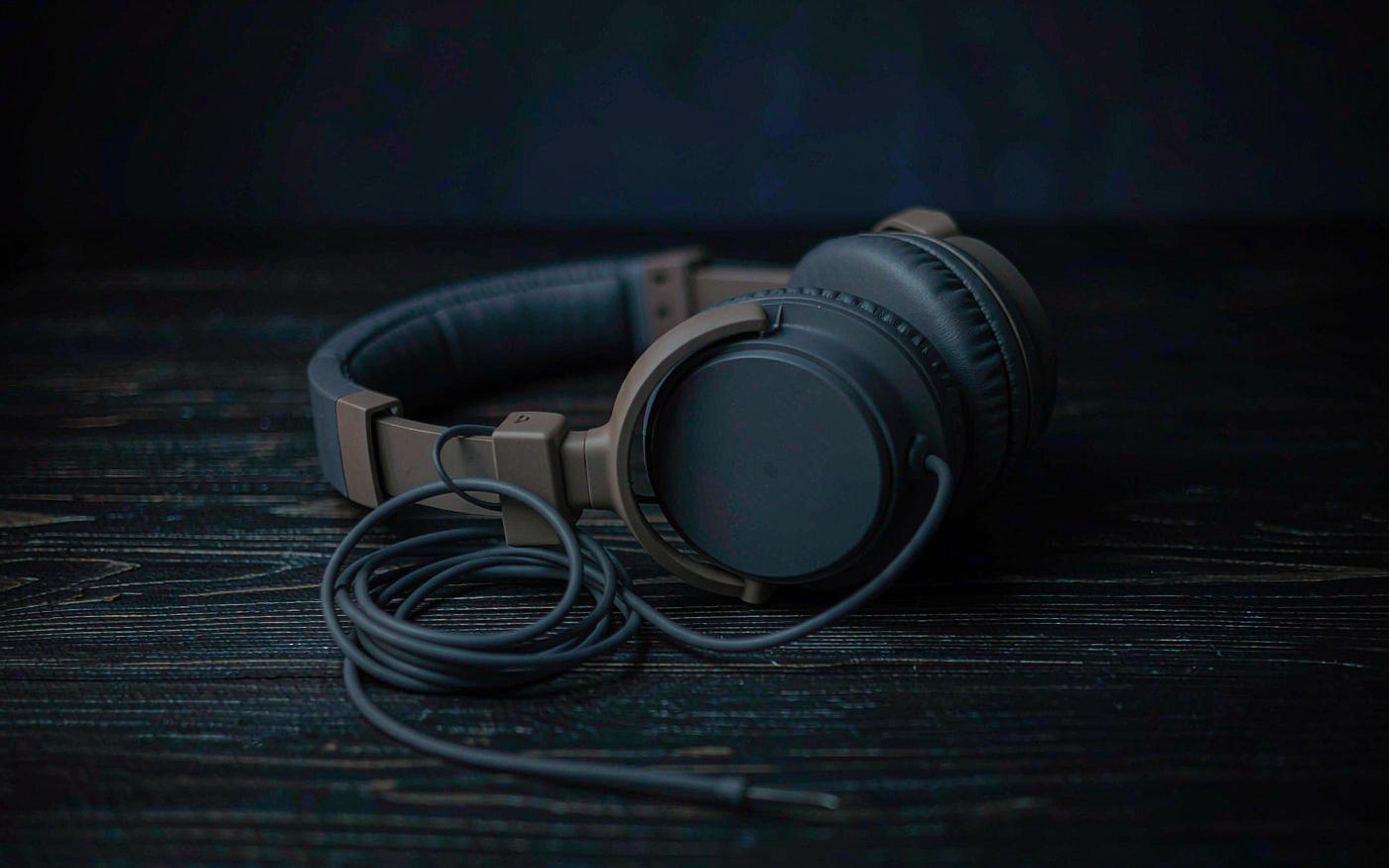
Over-ear cups are the right default from about three to ten. They spread the pressure over a larger area, they are harder to lose, and a well-padded pair can be worn for a two-hour flight without complaint. The trade is size and heat.
On-ear and in-ear designs do not suit young children. Ear canals are smaller, so a bud that fits an adult does not seal, and the natural response is to turn the volume up. Hygiene is the second problem, and losing one earbud is the third.
Bone conduction sits outside the ear canal and transmits through the cheekbone. The genuine advantage is that the ears stay open, so a child can hear traffic and a parent at the same time — which makes it the better choice for a child cycling or walking to school. The genuine disadvantage is that there is almost no bass, and in a noisy environment the content is inaudible at safe volumes, which pushes the listener to raise them. Bone conduction is a situational-awareness product, not a sound-quality one.
| Type | Ages | Strength | Weakness |
|---|---|---|---|
| Over-ear, wired | 3–8 | Simple, hard to lose, no charging | Cable snags and eventually breaks |
| Over-ear, Bluetooth with ANC | 8+ | Best for flights and for quiet at home | Needs charging; another device to manage |
| Bone conduction | 7+ | Child still hears the street | Poor bass; struggles in noise |
| In-ear / earbuds | 12+ | Small, cheap | Poor seal at younger ages, hygiene, easy to lose |
By age, what to buy
Headphones for 1 year old and 2 year old children
There is no good reason to put headphones on a one-year-old, and almost every kids headphones for toddlers product on the market exists to solve a flight rather than an everyday need. The ear cups do not fit a small head without pressure, the child cannot communicate discomfort, and the appropriate amount of headphone use at this age is none. The exception is a noisy environment where the alternative is worse, and even then the answer is a shorter stay, not headphones.
Headphones for 2 year old children exist as a product, and they are mostly sold to parents who are about to fly — which is also where the best headphones for toddlers are bought, in an airport shop, at the worst price of the year. If you are in that position, buy the smallest over-ear pair with a hard limit and accept that it may be pulled off within ten minutes.
Headphones for 3 year old children and up
Three is where a first real pair makes sense. Headphones for 3 year old children should be wired, over-ear, and fixed at 85 dB with no accessible switch. Wired matters more than it sounds: there is no pairing, no battery to be flat at the wrong moment, and nothing to configure while a child is tired.
Volume limiting is the one feature not to compromise on at this age, because a three-year-old cannot be taught to moderate. They will push the slider to the end and keep it there.
Headphones for 7 year old and 8 year old children
Two use cases diverge here. Headphones for 8 year old school use and headphones for 9 year old school use have the same requirements: wired, durable, and not too isolating — a child needs to hear the teacher. For home and travel, the best kids bluetooth headphones and the best wireless headphones for kids are the same purchase, and cancellation starts to be worth the charging overhead. Buying one pair to do both is a compromise that mostly works if the cancellation can be switched off.
This is also the age where fit starts to matter more than features. A headband that is too tight produces a headache within an hour and the headphones get abandoned, which is a more common outcome than any technical failure.
Headphones for 9, 10 and 12 year old children
Headphones for 12 year old children are a mainstream product with a limit set in software. By ten, the child has opinions and the useful role for a parent is limited to two things: insisting on a volume limit, and checking the fit. Headphones for 10 year old children that they chose and like will be used; a technically superior one they find ugly will not.
At twelve, the category effectively ends. A twelve-year-old wants what their friends have, the kids ranges look childish to them, and the sensible purchase is a mainstream pair with the volume limit set on the phone rather than in the headphones. Both iOS and Android support a hard volume cap in settings, and it applies to any connected headphone.
Noise cancelling headphones for kids with autism
This is a genuinely different use case and it gets conflated with listening, which leads to bad purchases.
For a child with sensory sensitivity, the headphones are not for music. They are a tool for reducing an environment that is overwhelming — a supermarket, a school hall, a birthday party. What matters in that use is passive isolation first, comfort second, and audio quality not at all. Several children in this situation never play anything through them.
Two practical consequences. First, the fit has to be comfortable for long periods, which rules out tight bands regardless of how good the cancellation is. Second, a pair bought for this purpose should be usable with the electronics off, because a child in distress will not wait for a battery to charge. A passive-only pair with deep cups is often the better purchase, and it costs less.
We would be cautious about any product marketed specifically as an autism headphone. The underlying hardware is the same as any over-ear pair; what differs is the padding and the marketing, and the padding is the part you can judge by reading the dimensions.
The five mistakes that cost the most
- Buying a fixed 85 dB pair for flying. It is quieter than the cabin, so the child turns everything up or takes them off. Get the switch.
- Buying Bluetooth for a four-year-old. A flat battery at the start of a flight is the classic failure, and there is nothing to do about it.
- Ignoring the cable. On wired pairs this is the part that breaks, usually at the plug. A braided cable and a replaceable one extend the life of the whole purchase.
- Buying in-ear for a young child. The seal does not form, so the volume goes up, which defeats the purpose of the limit.
- Treating the limit as total protection. Duration is the variable the headphone cannot control.
FAQ
Are 85 dB headphones actually safe for kids?
Safer than unlimited ones, and not a guarantee. 85 dB is an exposure limit for roughly eight hours under occupational standards written for adults; the WHO-ITU standard puts the child reference dose at 75 dB for 40 hours a week, which is the more useful figure to hold in your head. The limit prevents the worst outcome — a child holding the volume at maximum for an hour — and does not make long sessions harmless.
Is active noise cancelling bad for children’s ears?
No. Cancellation does not put pressure on the ear in any way that damages it, and the common complaint is a sensation of pressure rather than an injury. The real trade-off is that it removes the ability to hear the environment, which is a safety question rather than a hearing one.
Should I buy the best kids headphones or just a cheap pair?
For a young child, buy cheap and durable with a hard limit, because they will be dropped, sat on, and outgrown. The best headphones for kids at five and at ten are different products, and so are the best headphones for children who fly and the ones for children who walk to school: the first needs a limit and a cable, the second needs comfort and a switchable cancellation mode.
What are the best kids headphones for school?
The best kids headphones for school are wired, over-ear, and not fully isolating. Schools generally want a 3.5mm plug rather than Bluetooth, because pairing eight children in a classroom is not something anyone wants to manage. Noise cancelling headphones for school are usually the wrong purchase for that reason.
Do I need a splitter for two children on a flight?
Yes, and it is the cheapest item in this whole category. A passive 3.5mm splitter lets two pairs share one screen, which is the difference between one child watching and two children arguing.
Is bone conduction better for kids?
Better for safety on a street, worse for everything else. The ears stay open, so the child hears traffic and instructions, but there is almost no bass and the content struggles in noise, which pushes the volume up — the opposite of what the limit is for. It is a good second pair, not a first one.
Buying by age rather than by specification? Our gifts for 10 year old boys guide puts headphones next to the other things that actually get used at that age. If a pair is going into a stocking rather than under the tree, our stocking stuffers for kids guide covers the small items that go with it.
How we researched this
This article draws on three things: the published specifications of the current models in each category; the standards underneath the decibel claims, chiefly the WHO-ITU global standard for safe listening devices and NIOSH guidance on occupational noise; and the failure patterns described in owner reviews, which for headphones cluster around cables, headband pressure, and battery life rather than sound quality.
We have not measured sound pressure in a child’s ear, and we do not have lab data for any of these products. Our claims about what a limit circuit does and does not do come from how the electronics are specified, not from a test bench. Where a product has been in our hands, the article says so; this one does not.
Prices are US retail as of October 2026, and the model lists behind this piece are the 2026 ranges rather than older stock still on sale. Because the best kids headphones 2026 lists you will find elsewhere are mostly affiliate rankings by commission, this article names categories and specifications rather than a top five. This article covers headphones only — if the device they are being plugged into is the question, that is covered in our guide to kids tablets.