Somewhere around her twelfth birthday, the toy aisle stops being a place she shops and becomes a place she walks past. This is not a phase and it is not ingratitude. It is the year the things she wants start being judged by people who are not you, and the year a gift has to survive being seen.
That single shift reorganises everything about buying for a twelve-year-old girl. The doll she would have loved at nine now reads as a step backwards. The science kit with the cartoon box now reads as a gift for a child. And the things she actually wants — a proper pair of headphones, a real camera, a bag that does not look like it came from the school supply aisle — are the things most gift guides skip, because they do not fit neatly into a category page.
This guide is for the year the toy shelf runs out. It covers why the usual advice stops working, the four problems that actually decide whether a gift lands, shortlists by what she does with her time rather than by what aisle it is in, what different budgets realistically buy, and a section on what to skip that is longer than usual because this is the age where the wrong gift does real social damage.
Why the toy aisle stops working at twelve
Three things happen at roughly the same time, and each one removes a support the gift used to lean on.
Her interests narrow and deepen. At eight, a child will happily receive almost anything in a category she mildly likes. At twelve, she has usually picked two or three things she actually cares about and let the rest go. A gift that sits outside those two or three things is not a near miss; it is invisible. This is the single most common reason a well-chosen, age-appropriate, genuinely good gift gets a polite thank-you and then lives in a drawer.
Her peers start outranking you. The developmental research on this is consistent and has been for two decades. Adolescents show a sharp increase in reward-seeking behaviour when peers are present, peaking in early adolescence — roughly eleven to fourteen — and declining after that. Developmental scientists describe it as a dual-system problem: the system that responds to reward matures early, the system that puts the brakes on matures late. Practically, this means a twelve-year-old is not being difficult when she cares what her friends think of a gift. Her brain is doing exactly what it is supposed to be doing at that age, and buying against it is a fight you will lose.
The marketing category changes under her feet. The toy industry has a name for what happens at twelve: the customer stops being a child and becomes a kidult, a category that has been one of the few reliable growth areas in the trade for several years running while traditional toy sales flatten. What this means for you is that the products designed for her age are no longer shelved with the toys. They are shelved with stationery, with audio, with home, with sporting goods, with beauty. If you shop only the toy aisle, you are shopping an aisle she has already left.
The practical rule that comes out of this: buy her the thing a fifteen-year-old would also be happy to own, and then check that it does not embarrass a twelve-year-old. That window is narrow but it is real, and almost every good gift for this age sits inside it.
The gift is now a social signal
At eight, a birthday gift is opened in front of family. At twelve, it is opened in front of friends, photographed, and — in a meaningful number of cases — posted. That changes what the gift has to do.
Three rules follow from this, and they are worth more than any product list.
Do not buy the thing that gets laughed at
There is a specific category of gift that reads as my mother chose this: character-branded anything past age ten, clothing with visible slogans, items that light up, items shaped like animals. It is not that these are bad products. It is that they broadcast a relationship the twelve-year-old is actively trying to renegotiate — the one where a parent still picks her things.
The test is simple: could she carry it into school without explaining it? If the answer is no, it is a gift for home only, and it should be given at home, not at the party.
Do not buy the thing that needs a preamble
Anything that requires you to say “I know it looks strange, but—” has already failed. This includes educational gifts with a message, charitable gifts given in her name, and anything with a book attached explaining what it is for. At twelve, a gift is not allowed to also be a lesson. The lesson can come later, once she likes the thing.
Do buy the thing that signals she is trusted
The gift that lands hardest at this age is almost always the one that treats her as older than she was last year. A real camera instead of a toy one. A proper lamp for her desk instead of a nightlight. A wallet with a little money already in it. A bag that is not a school bag. None of these are expensive. All of them say the same thing, which is the actual product being bought: you are old enough for this now.
That message is worth more at twelve than at any other age, and it is why a twenty-five dollar gift that carries it will beat a hundred-dollar gift that does not.
The size problem nobody writes about
This is the least discussed and most frequently fatal issue in gifts for twelve-year-old girls, and it is worth a full section because it is entirely solvable.
At twelve, girls are at wildly different points in puberty. The normal range for the start of breast development is anywhere from eight to thirteen. Growth spurts arrive on similarly wide schedules. The practical result is that two twelve-year-old girls in the same class can differ by eight inches in height and by two or three shoe sizes, and both are completely normal.
This makes clothing and footwear genuinely risky as gifts, in a way that is not true at eight. A girl who is still in children’s sizes will be embarrassed by an adult extra-small. A girl who has already moved into adult sizes will be insulted by a children’s large. And because you cannot see the label once it is unwrapped, the mistake is public.
Three ways out, in order of how well they work.
Buy things that are sized by adjustment, not by number. A bag with an adjustable strap. A robe with a tie waist. Socks in a range that fits. A blanket. A scarf. Anything where the fit is decided by the wearer.
Buy accessories, not garments. Hair things, jewellery, a small purse, a lanyard, a keyring. These do not have a size problem and they carry exactly the “older than last year” signal described above.
If you must buy clothes, buy up and buy plain. A slightly oversized, unbranded, single-colour sweatshirt is wearable by almost any twelve-year-old and reads as intentional. A fitted, printed, sized item is a coin flip. And if you are buying for someone else’s child, ask the parent for a size rather than guessing — the parent will not think less of you for asking, and the child will not have to perform gratitude for something that does not fit.
The threshold into real things
The most useful distinction at this age is not price and it is not category. It is whether the thing is a real version or a toy version of the same idea. Twelve is when that distinction starts to be visible to her, and it is the single best filter for choosing a gift.
Four questions separate the two.
Can it be repaired? Real tools have parts you can replace. A real sewing machine takes a standard needle and a standard bobbin. A real camera takes a standard card and a standard battery. A toy version is sealed, and when one piece goes, the whole object goes. This matters more than it sounds, because a gift she can maintain is a gift she keeps using, and a gift she keeps using is the one she remembers.
Was it made for adults who do the thing, or for children who pretend to? A real kitchen knife, scaled down, is a real knife. A plastic knife that cannot cut is a toy. A real instrument that can be tuned is an instrument. A keyboard with painted keys and no touch sensitivity is a toy. The tell is almost always whether an adult who does the activity could use the object without embarrassment.
Does it have a consumable she will need to buy again? This sounds like a drawback and is actually the opposite. Things with consumables — paper, film, yarn, thread, filament, refills — stay in her life because using them is a habit rather than an event. Things without consumables get used twice and shelved.
Would a fifteen-year-old be seen with it? This is the social test from earlier, applied to the object rather than the packaging. A decent instant camera passes. A camera shaped like a cartoon character does not.
The trap here is over-correcting. “Real” does not mean professional-grade, and a twelve-year-old does not need a two-hundred-dollar tool to find out whether she likes a hobby. It means buying the cheapest version that is still genuinely the real thing. That is almost always cheaper than the mid-range toy version, which is the part people find surprising.
Shortlists by what she actually does
Everything below is organised by activity rather than by product category, because at twelve the activity is the thing she identifies with and the product is just the excuse. Pick the section that matches her, and ignore the rest.
If she makes things
This is the widest and safest territory at twelve, because it survives the social test: making things is not childish, and the output is visible and shareable.
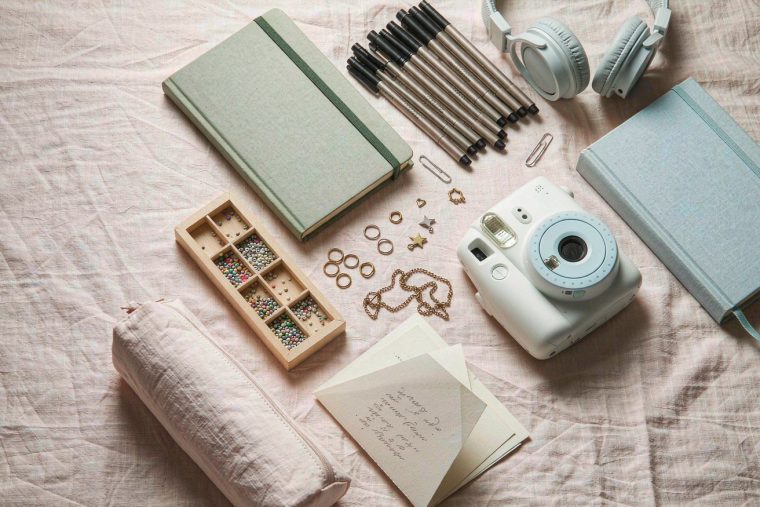
- A proper sketchbook and a real pen. Not a novelty set. A hardbound book with paper heavy enough for marker, and one pen that is genuinely good — a fine-liner in the 0.3 to 0.5 range. The whole thing costs under twenty dollars and gets used more than almost anything else on this list.
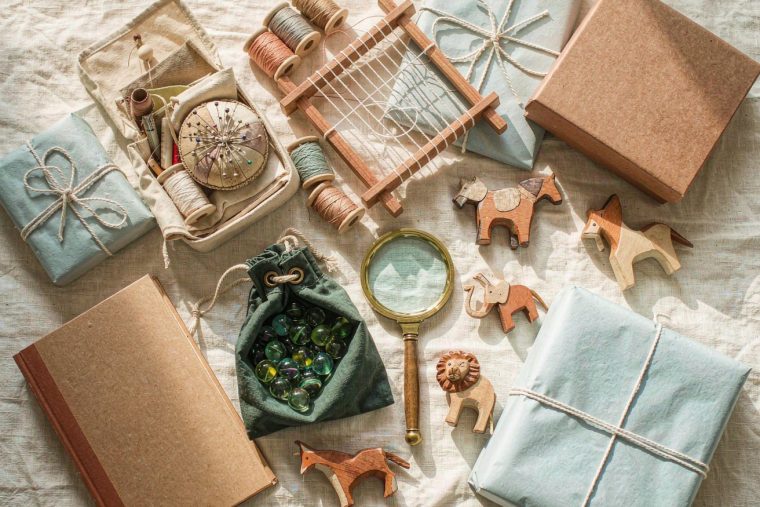
- A sewing kit that is not a toy. Real needles, real thread, a seam ripper, a small pair of proper scissors. If she already sews, a machine is the jump — but buy the cheapest machine from a brand that also sells service parts, not the most featured machine from a brand that does not.
- Yarn, thread, or clay with a project attached. Materials alone are a chore. Materials plus one specific thing to make are a gift. Include the pattern or the instruction sheet, printed.
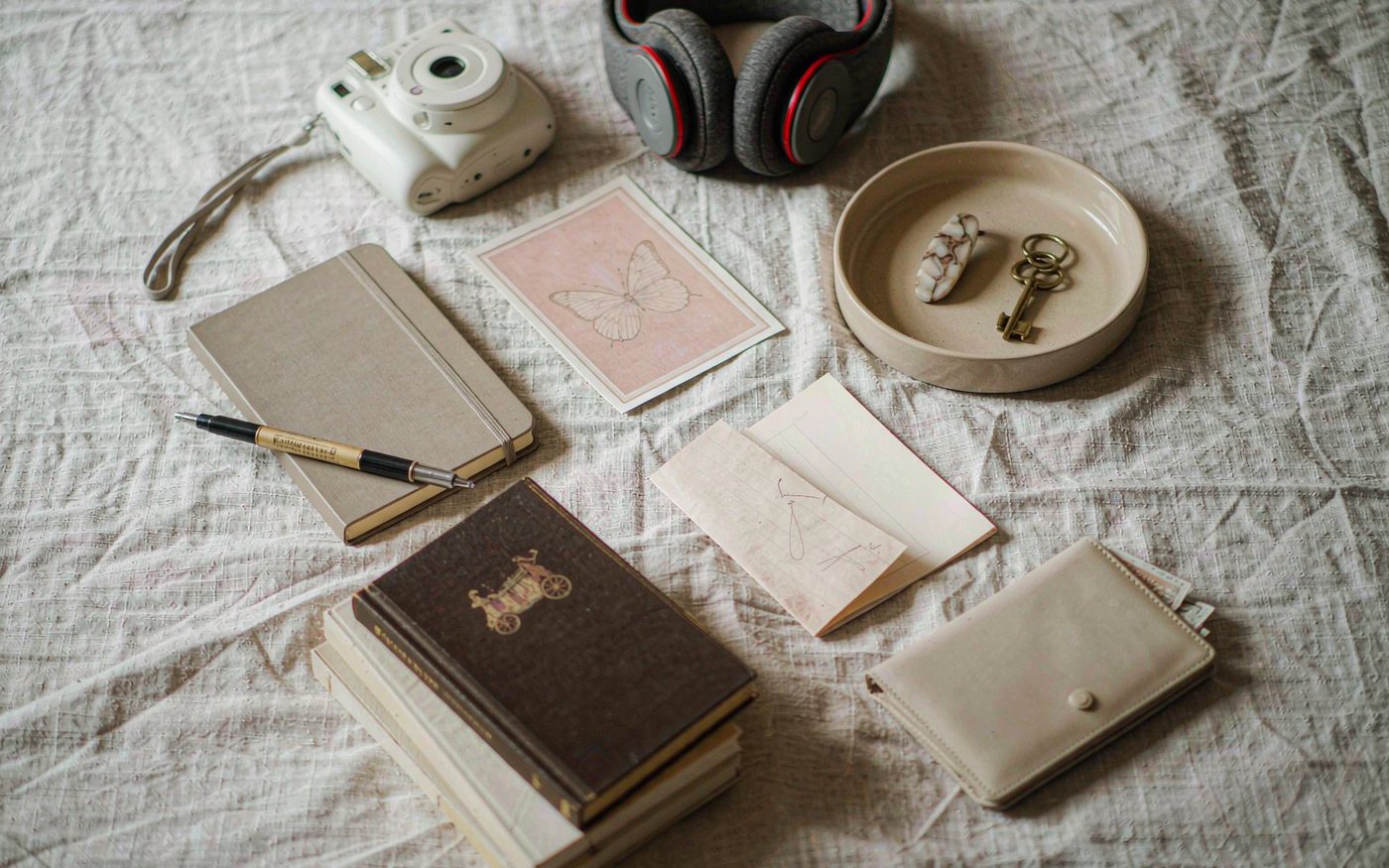
- A cheap instant camera. The output is physical, which is the whole point at this age, and the film cost teaches a useful lesson about rationing. This is one of the few electronics that reliably survives the “would a fifteen-year-old carry it” test.
If she reads
Twelve is the year reading either becomes private or stops. The gift that helps is not a book you loved at twelve; it is the next book after the one she is currently carrying.
- Buy the second book in a series she has started, not the first book in a series you like. The first book is a recommendation. The second book is an assumption that she is a reader, and that assumption is the gift.
- A reading light and a door that closes are the two pieces of infrastructure that make late reading possible. Both are cheap. Neither is a book, which is why nobody gives them.
- A book with a physical object attached — a map, a set of postcards, an illustrated edition — works better than a paperback at this age, because it looks like an object rather than an assignment.
One warning, and it applies to every age but especially here: do not buy above her reading level to signal ambition. Giving a twelve-year-old a book written for adults, because it is a classic, is one of the most reliable ways to make her stop reading. The right book is the one she can finish in a week and want another of.
If she listens to music
This is the strongest category at twelve, and it is where most gift guides are weakest, because the products are not toys and therefore not shelved with toys.
- Headphones she chose the colour of. At this age the colour matters as much as the sound, and pretending otherwise is how gifts get returned. Buy a pair with a published volume limit — 85 dB is the number to look for — and let her pick the finish.
- A speaker for her room. Small, one-piece, no app required. Anything that needs a parent’s phone to set up will not get used.
- One physical album. Vinyl or CD, of something she already streams. It is a decorative object and a piece of identity at the same time, and it costs less than a month of streaming.
Skip anything that requires a subscription she does not control. A gift with a monthly bill attached is a gift to her parents, and at twelve she knows exactly who is paying.
If she moves
Sports and dance gifts fail for one reason: they are bought for the sport she does, not the body she has this month. Buy equipment that adjusts.
- A bag that fits her actual kit. Not a generic duffel — one with a wet pocket and a shoe compartment, in a colour she will carry.
- A water bottle that is genuinely good, meaning it keeps cold for a day and does not leak in a bag. This is the most-used gift on this entire page and the least exciting to give.
- Resistance bands, a mat, or a jump rope if she trains at home. Cheap, unsized, and used if she already has the habit.
Do not buy a fitness tracker as a first gift in this category. A device that reports numbers back to a twelve-year-old girl about her own body is a conversation, not a present, and it is a conversation that should be had deliberately if at all.
If she games
Gaming gifts at twelve have a specific failure mode: buying hardware for a platform she does not play on. Confirm the platform before you spend anything.
- A controller in her colour. Cheap, universal, and immediately used.
- A headset with a boom mic if she plays with friends. This is the difference between playing alone and playing with people, which at twelve is the entire point.
- A gift card for the store attached to her platform, not a generic one. Ten dollars in the right store beats thirty in the wrong one.
If she is on a screen more than you would like
The instinct is to buy something that gets her off the screen. That instinct usually produces a gift she resents. A better move is to buy something that makes the screen time produce something.
- A drawing tablet, entry level, with a stylus that does not need charging. Turns consumption into output.
- A keyboard if she writes, codes, or posts. Genuinely useful, reads as adult equipment, and unlike almost everything else here it will still be in use in five years.
- A printer is the unglamorous answer that works, because it turns the thing she made on a screen into something she can hold, which is what she actually wants.
What $25, $60 and $120 actually buy
Prices move, so treat this as a shape rather than a quote. The point is what each band can realistically deliver at this age.
| Budget | What it buys, and the one pick we would make |
|---|---|
| Around $25 | One real thing, small — an accessory, a consumable, a single good tool. Best pick: a hardbound sketchbook with a genuinely good pen, or headphones in her colour. |
| Around $60 | One real thing she will use weekly for years. Best pick: an entry-level instant camera with two packs of film, or a proper desk lamp. |
| Around $120 | One piece of equipment that outlasts the year, or two mid-size gifts. Best pick: an entry-level drawing tablet, or a real sewing machine from a repairable brand. |
Two rules cut across all three bands.
One good thing beats three cheap things. This is the opposite of the advice that works at six, and parents and grandparents both get it wrong at twelve. Three small gifts read as a care package. One real gift reads as respect. If your budget is sixty dollars, spend sixty on one object.
Put some of the budget into the consumable. A camera with no film is a paperweight on Christmas morning. A sewing machine with no thread cannot be used that day. The single most common reason a good gift dies in the first week is that it arrived without the thing it needs to work.
When you have never met her
A large share of the people searching for gifts for a twelve-year-old girl are not her parents. They are aunts and uncles, family friends, colleagues buying for a colleague’s child, and grandparents who see her twice a year. The advice for that group is different, because you cannot use the “what does she actually do” filter.
Three gifts are close to universal at this age, in the sense that they will be received well even by a girl whose interests you do not know.
A good pair of socks, in a plain colour, in a size range. Sounds like a joke gift. Is not, at twelve, because it is the age where small comforts stop being boring and start being a small luxury. Buy wool or a wool blend, not novelty prints.
A gift card, given with an object. A card alone reads as “I did not try.” A card with a small, safe object attached reads as “I did not want to guess wrong, so here is the choice plus something to open.” The object can be under ten dollars. Its job is to be opened.
A consumable luxury. Nice hand cream, a good lip balm, a set of decent pens, fancy hot chocolate. These work because they are used up, which means they never become clutter and never become a burden to keep.
What to avoid when you do not know her: anything that requires knowing her size, her platform, her reading level, or her taste in colour. That is four of the five things gift guides usually recommend.
Things to skip
This section is longer than it would be for any other age, because at twelve the downside of a bad gift is not disappointment. It is embarrassment, and embarrassment at twelve is remembered.
Adult skincare and makeup sets. The multi-step routines marketed to this age group contain actives — acids, retinols — formulated for adult skin. Paediatric dermatologists are consistent that children do not need them, and that the most common result of early use is irritation, not improvement. A gentle cleanser and a lip balm are the entire correct answer. Anything with a numbered step system is a marketing product wearing a gift box.
Anything that measures her body. Scales, fitness trackers, calorie apps, “wellness” journals with weight logs. Twelve is the peak onset age for body image disturbance in girls, and a gift that turns her body into a number to be improved is a gift with a real cost. If she wants to be active, buy the activity, not the measurement.
Anything labelled “for teen girls.” This label is a marketing signal rather than an age signal, and it usually means the product is a younger item in a different colour. Twelve-year-olds recognise this instantly, and being given a product explicitly labelled for their age group is, at this age, mildly insulting.
Anything with a subscription she does not control. Box subscriptions, app subscriptions, anything with a recurring charge. At twelve she cannot cancel it, which means it becomes a monthly reminder that the gift had a string attached.
Miniature electronics. Tiny drones, tiny cameras, tiny keyboards. They photograph well and break in a fortnight, and the failure is more annoying at twelve than at eight because she is old enough to feel she was given a joke.
Blind boxes and collectible packs, in quantity. One is a surprise. Five is a variable-reward loop, and the mechanism is the same one regulators have spent a decade examining in game loot boxes: an uncertain reward on a repeatable purchase. If she is collecting a set, buy her the specific one she is missing. It costs less and it does not teach her to keep pulling.
Anything that requires you to explain why it is good. If the pitch is longer than the gift, the gift is wrong. This is the one rule that would eliminate most of the bad gifts on this page.
How we put this together
Three inputs, in order of weight.
What the age actually is, developmentally. The peer-sensitivity and reward-seeking patterns described above come from the developmental literature on adolescent risk behaviour, which has been stable for two decades, and the puberty timing ranges come from standard paediatric growth references. We use these to set the frame rather than to pick products, because a gift that fights the developmental stage loses regardless of quality.
What the products actually are. For every item that appears in the “real versus toy” section, the test is whether the object can be repaired, whether it takes standard consumables, and whether an adult who does the activity could use it. That is a lower bar than “professional grade,” deliberately, because a twelve-year-old is sampling hobbies, not committing to them.
What goes wrong. The skip list is built from the failure modes we see repeatedly in this category — the subscription with a bill, the skincare set with actives, the device that measures a child’s body, the gift that needs a preamble. Those are not hypothetical objections. They are the reasons a gift gets thanked for and then never mentioned again.
What we do not do: we do not rank by commission, and we do not include a product we would not give to a twelve-year-old we know. Where a cheaper option does the same job, the cheaper option is the recommendation.
Frequently asked questions
What do you buy a twelve-year-old girl who says she wants nothing?
“Nothing” at twelve almost always means “nothing you would think of.” The reliable move is to buy something consumable and slightly luxurious — good pens, a nice lip balm, a set of decent socks — plus one small object she can use in private. Private use is the key: a gift she does not have to show anyone cannot be judged by anyone, and at this age that is what makes it safe.
Is money an acceptable gift?
Yes, with one condition: give it in a form she can hold. Cash in an envelope, or a card to a store she actually shops in. A transfer to an account her parents control is not a gift from her point of view. Twelve is also the age where money starts being genuinely useful to her, because her tastes are specific and her budget is small.
How much should you spend on a friend’s birthday at this age?
The informal range in most US schools at twelve is fifteen to thirty dollars, and going far above it creates an obligation the other family has to match. If you want to spend more, spend it on your own child or on an experience the two of them do together — a ticket, not an object. The object is what gets compared.
Are phones and tablets good gifts at twelve?
This is a family decision rather than a gift decision, and giving one as a present removes the parents’ ability to set the terms before it is opened. A better gift in the same territory is an accessory for a device she already has — headphones, a case, a stand, a controller — because it improves the thing without reopening the argument.
What about clothes?
Only if you know the size or the person buying can exchange it without it being a thing. Otherwise buy accessories, which have no size problem and carry the same signal. The full reasoning is in the size section above, and it is the most common avoidable mistake in this category.
Is a craft or hobby kit too babyish at twelve?
The kit is not the problem; the packaging is. A hobby kit sold in a cartoon box with an age range of six to twelve will be received as a gift for a younger child even if the contents are good. Buy the components separately, or buy the same hobby’s adult-packaged version. The activity is fine at twelve. The shelf it came from is not.
What if I buy the wrong thing?
Give the receipt, casually, without ceremony. A gift with a receipt is a gift that says “I would rather you had the right one.” At twelve that reads as respect rather than as an admission of failure, and it removes the entire risk of the gift becoming a thing she has to pretend to like.
The one thing not to do is ask her, after the fact, whether she liked it. At this age the honest answer costs her something to give, and the polite answer teaches you nothing.