The stocking is where gift money goes to die. Somewhere between fifty and a hundred dollars gets spent on twenty small objects, and by the second week of January eighteen of them are in the bin, three are lost behind a radiator, and one is being used as a doorstop. Nobody planned it that way. It happens because the stocking is shopped last, in a hurry, in the one aisle of the store that is engineered for exactly this failure: a wall of cheap plastic, packaged to look like more than it is.
There is a way to spend the same money and end up with a stocking whose contents are still in use in March. It does not require more budget, and it does not require finding a boutique. It requires deciding what a stocking is actually for before you start buying.
What a stocking is actually for
It is not a second round of presents. It is the pacing device for the morning.
Think about the timeline of Christmas morning in a house with children. Everyone is awake at an hour that should not exist. The adults need twenty minutes to become functional. The main gifts cannot start until everyone is downstairs and the coffee is made, and if there is nothing to do in that window, the window becomes chaos — kids circling the tree, shaking boxes, asking whether it is time yet, every ninety seconds, for forty minutes.
The stocking fills that window. That is its job. So the requirement is not “impressive.” The requirement is self-starting and slow: things a child can pick up and use alone, immediately, without an adult reading instructions or finding a screwdriver, and that will hold attention long enough for the adults to drink something hot.
That single reframing kills most of the bad purchases. A light-up novelty that runs for nine minutes fails the test. A sketchbook and a set of good pencils passes it dozens of times over, because it gets picked up again on Boxing Day, and in February, and on a rainy Sunday in April.
Three rules that do most of the work
Rule one: consumable beats durable
Anything that gets used up cannot become clutter. Art supplies, tape, stickers, clay, bath color, seeds, snack items, a magazine — these are spent by spring and nobody has to decide what to do with them. Anything durable brings a storage problem with it, and a stocking full of durable small objects is a drawer of plastic by February.
The practical version of this rule: aim for three or four consumables in every stocking, whatever the age.
Rule two: usable in sixty seconds, with no adult and no battery
If it needs pairing, downloading, charging, or an adult with scissors, it is not a stocking stuffer. It is a January project wearing a bow. This is why so many good-intentioned tech gifts for this price band are the wrong choice for a stocking specifically — they are fine gifts, but they need a setup session, and a setup session during the Christmas-morning window is the opposite of help.
Batteries deserve their own line. Toys that need them, sitting in a stocking, produce a child holding a dead object and an adult hunting for AA cells. If you buy something that runs on batteries, buy the batteries and put them in the same bag, and expect to install them yourself before the morning starts.
Rule three: small in size, not small in quality
The characteristic failure of the stocking aisle is the multipack: ten items for five dollars. The economics look good and the outcome is worse than buying nothing, because the first one breaks within the hour and the child learns that gifts in this category are disposable. One good pencil sharpener beats six that shave the wood and snap the lead.
There is a real cost ladder here, and it is not the one the packaging suggests. A four-dollar sketchbook from an art shop will take months of use. A one-dollar notebook from a multipack falls apart in a week. The price difference over a year of use runs the other way.
The age bands, and the safety line that matters
Stocking content changes more between three and six than it does between six and twelve. Three rough bands:
Ages 3–5. Biggest single constraint: everything is in the mouth. This is the band where the safety rules below are not advisory. Best content: board books, chunky crayons and finger paint, sticker books, play dough, bath toys, character socks, a small doll or vehicle, a sturdy wooden puzzle.
Ages 6–8. The reading click usually happens here, and the stocking is a good place to feed it. Best content: early chapter books, graphic novels, decent colored pencils, small building sets, card games for two players, a hand lens, a real flashlight, joke books.
Ages 9–12. They want to be treated as competent, and they can smell a babyish item instantly. Best content: fine-liner pens and a proper sketchbook, a real multi-tool or small tool kit, a metal brain-teaser, a book of records or strange facts, sports gear accessories, a wallet, a watch, headphones if they do not already have a pair.
Small parts, and the test that actually gets used
In the United States, toys intended for children under three may not contain small parts, under a regulation usually cited as 16 CFR 1501. The test fixture is a cylinder roughly the size of a toilet-paper tube. If a part fits inside it entirely, it fails — which is why “does it fit through a toilet roll” is the version of this rule that circulates among parents, and it is close enough to be useful.
What that rules out for a child under three: marbles, standard LEGO bricks, small magnets, tiny figures, beads, and anything with a removable eye or button. For older children it is less of an issue, but if there is a toddler in the house, the stocking of a nine-year-old is a hazard to them, not to him. That is a real problem in households with mixed ages and it is worth planning for rather than discovering.
Button batteries are the one item worth being rigid about
Coin-sized lithium cells are the most dangerous thing that routinely ends up in toys, because a swallowed cell does not simply pass through. It completes a circuit against wet tissue and can cause chemical burns within a couple of hours. US poison centres record thousands of button-battery ingestions a year, a disproportionate share of them in children under six.
The practical rule: nothing with a button battery in a compartment a child can open. Battery doors held by a single small screw are the minimum, and if the toy is for a child under three that screw should not be removable by the child’s own fingers. If a button battery is loose in the house for any reason, it goes in the bin immediately, not in a drawer.
High-powered magnet sets are in the same category and are restricted in the US for good reason — two magnets that find each other across a loop of intestine do damage that does not show up for days. They do not belong in a house with young children, whatever the age on the box.
Art and making: the highest-value group
If you only do one group, do this one. It is the cheapest per hour of engagement of anything on this page, it is consumable, and it is usable within seconds of unwrapping.
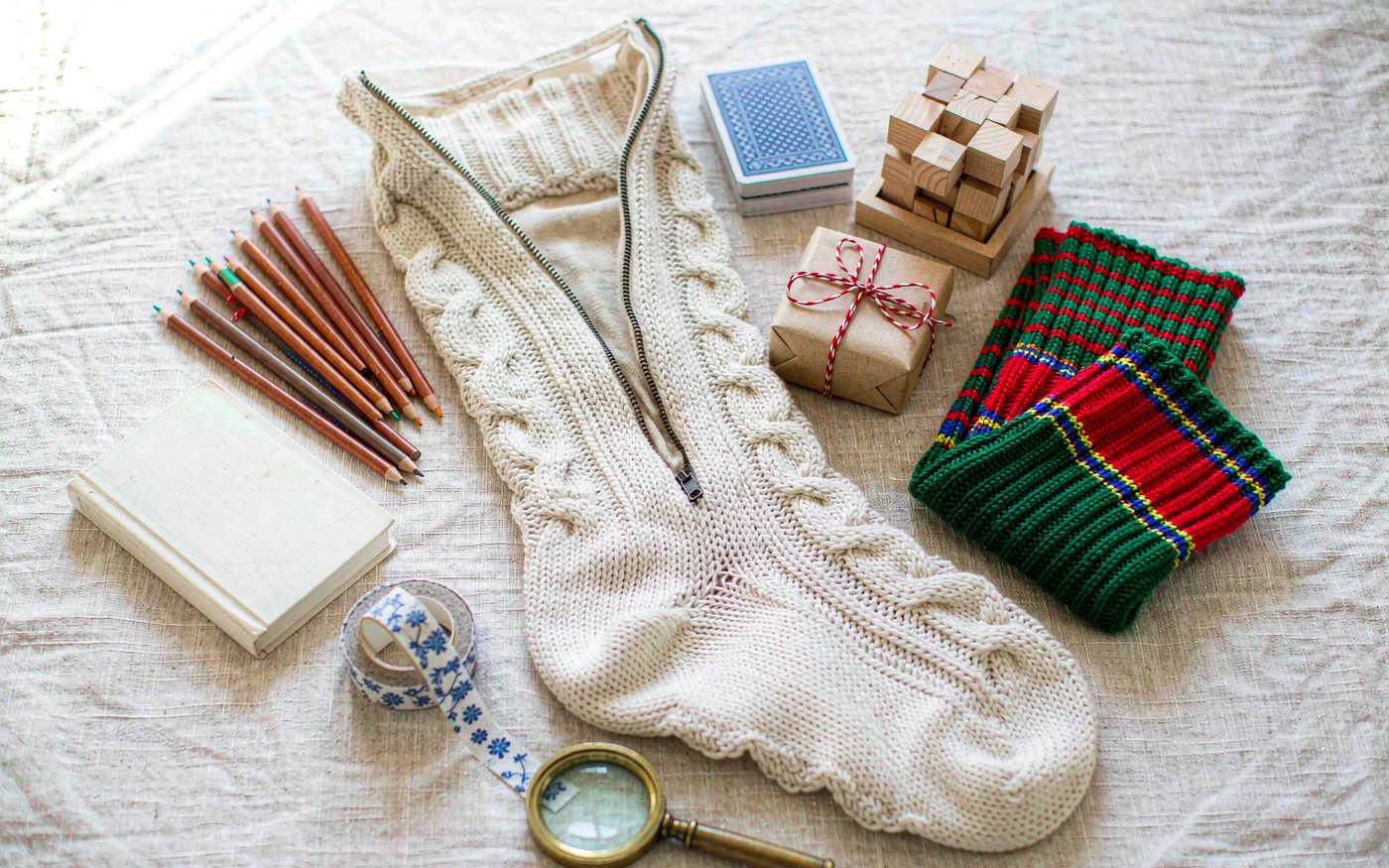
Good colored pencils. Not the twelve-pack. A twenty-four or thirty-six set of a proper student grade gives real pigment instead of wax that skips across the paper. This is the item where the quality difference is most visible to a child, and the one they will notice immediately.
A watercolor pan set with a brush that works. The brush in the box is usually the weak point. A separate number-six round brush costs a few dollars and changes the experience completely.
Tape. Masking tape, washi tape, colored electrical tape. This sounds like a joke and it is not: tape is the single most requested supply in most households with children, and a child with a roll of good tape and a cardboard box is occupied for an hour.
A reusable sticker book. The reusable kind, on a coated page, so it survives past the first afternoon.
Air-dry clay or proper modeling clay. Air-dry needs no oven and no adult supervision, which is exactly what the sixty-second rule asks for.
A small hardback sketchbook. Hardback matters — a softcover notebook in a stocking gets crushed. Small matters too; it goes in a bag or a coat pocket, which is how sketchbooks actually get used.
Fine-liner pens. For the over-nines particularly. They make drawings look intentional, and children notice the difference.
A craft kit in a bag. Friendship bracelets, origami paper, or a small sewing kit. The criterion is that everything needed is in the bag, so it can be started without a hunt through the house.
Books, which still work
A book is the only stocking item that can occupy a child for two hours on the day and again three months later, and it costs less than most of the plastic alternatives. The trick is matching format to reader.
Early chapter books for the six-to-eight band — short chapters, pictures still present, a series so the next one is a known quantity.
Graphic novels. The most underrated category for children who “do not like reading.” The page is doing work the text is not, and volume of reading is what builds fluency.
Joke and riddle books. Genuinely the most-used item in many stockings, and the one parents regret by 8 a.m. That is the price of a self-starting item.
Browse books. Record books, atlases, animal encyclopedias, “why” books. These are not read front to back; they are opened at random for two minutes at a time, dozens of times, which is ideal stocking behaviour.
Activity books. Mazes, crosswords, dot-to-dot, “would you rather.” Cheap, consumable, and they work in a car.
Board books for the under-threes, small enough to hold, thick enough to survive teething.
Small building and making
The appeal of this group is that the object is not the point — the assembly is. Which is why it holds attention well past the morning.
A minifigure or a polybag set. The small-box end of the brick world is designed for exactly this and is priced for it.
Plus-Plus or similar single-shape tubes. One shape, endless output, and no instructions to lose.
An expansion pack for magnetic tiles. If the house already has a set, adding pieces is a better gift than a new system, because it upgrades everything already owned.
A mini brick vehicle or creature. Under an hour to build, and it survives being dropped.
A metal or wooden brain-teaser. One object, no parts to lose, and a real sense of achievement when it comes apart. Excellent for the nine-to-twelve band, who are harder to buy for than any other age.
If you want the deeper version of this category — what actually survives years of use rather than one morning — that is covered in our piece on building toys that hold up like LEGO.
Science and nature, in miniature
Small science items work in a stocking because they turn something ordinary into an observation. They also tend to be cheap, which is unusual for anything with the word “STEM” near it.
A gem or rock set with an identification card. Sorting and naming is the activity, and it repeats.
A real hand lens. Ten-power, glass if possible. A plastic magnifier that distorts is worse than nothing because it teaches that the tool does not work.
A bug viewer or magnifying jar. The kind with a lid and a grid on the base. In practice this gets used in the garden for years.
A grow-your-own crystal kit. Takes days, which is the point — it gives the stocking a second and third moment after Christmas.
A small thermometer or rain gauge. Cheap, and it converts weather into data.
Slime, with a caveat. Only from a kit with an ingredient list. Unlabelled slime from a discount bin is a material of unknown composition, and borax sensitivity is common enough that it is worth knowing what is in the tub before it goes on a child’s hands.
Screen-free small toys and games
A proper deck of playing cards. Not a promotional deck from a hotel. A real one, in a box, because it unlocks a dozen games that the whole family can play.
A set of dice. Six-sided for games, plus a few ten-sided if there is a budding role-player in the house.
A travel card game for two players. Small box, five-minute rules, replayable. This is the highest-value item in this group per dollar.
A fidget that actually works. The cheap light-up spinners are the canonical example of a stocking item that dies in a day. A well-made mechanical fidget with no electronics gets used for years, mostly during homework.
A yo-yo, a kendama, or a good jump rope. One skill, learnable, physical, and it gets them off the sofa in January. Quality matters more here than price suggests — a bearing yo-yo sleeps; a fixed-axle one does not.
A cube puzzle. A two-by-two for younger children, a three-by-three for the over-nines. Both are self-teaching, which fits rule two exactly.
Marbles in a cloth bag. Old-fashioned, cheap, and it turns into a game with rules that children invent.
Practical things children actually keep
This group looks boring on a list and is consistently the most-used. Children like being given real versions of adult objects. It reads as respect.
Socks with something on them. The single most reliable stocking item in existence, and the only one that will still be in use in three years.
A real headlamp. Not a toy torch. Something with a hundred lumens and a strap, which becomes essential for reading under a duvet, camping in the garden, and finding things under the sofa.
A water bottle they chose the colour of. Small enough to fit the stocking, good enough not to leak.
A wallet. Usually arrives at exactly the right moment, around seven or eight, when there is suddenly money to keep.
An analog watch. Doubles as the reason to learn to read one.
An umbrella. Small, folding, and theirs.
A toothbrush in a colour nobody else in the house has. Unglamorous, effective, and it is not clutter because it replaces something.
A small real tool kit. A screwdriver set, a tape measure, safety glasses. For the over-nines this lands better than almost any toy, because it is genuinely theirs and genuinely functional. It also happens to be the doorway into the kind of making that STEM kits assume a child already enjoys.
What to skip, and why
This section does not appear in most gift guides for an obvious reason: nobody earns a commission on a warning. It is also the most useful part.
The ten-for-five-dollars multipack. Breaks in the first hour. Teaches the child that these objects are disposable, which then applies to the better things too.
Anything with a button battery behind a flimsy door. Covered above. This is the one purchase on the list that can send a family to hospital.
Water beads. Sold as sensory play, and a genuine hazard: they expand inside the body and do not show up on a standard X-ray. Several countries have restricted them and paediatric surgeons have been asking for a ban for years. They are not worth the risk in a house with a child under five.
Laser pointers. Cheap, powerful, and capable of permanent retinal damage in under a second of direct exposure. Regulators have issued repeated warnings. They are not a toy and they do not belong in a stocking.
Mystery capsule and squishy toys. Often unlabelled materials, no age grading, no manufacturer address. There is nothing to check and nobody to complain to.
A mountain of candy. It eats a third of the stocking’s volume, provides no play, and delivers a sugar spike immediately before the main event — which is the worst possible timing for the rest of the morning. A small amount, placed at the bottom, works better than a bag of it.
Accessories for the main gift. Batteries, cases, and refills belong with the main gift, not in the stocking, or the child spends the morning with parts of something they do not have yet.
Anything that duplicates something already owned. The third yo-yo, the fourth deck of cards. The stocking works best as a place for the one version of a thing that the house does not already have.
How many, and what to spend
Eight to twelve items is the useful range for most families. Fewer feels thin; more turns into a shredding exercise where nothing is looked at. Of those, three or four should be consumable, one or two should be a book, and one should be the “anchor” — slightly bigger or better than the rest, and placed at the top.
On budget: the honest framing is not total spend but cost per hour of use. A twelve-dollar sketchbook with eight dollars of pencils will absorb twenty hours or more across the winter. A six-dollar light-up spinner absorbs about nine minutes. Both cost money; only one of them buys you a quiet Sunday.
If you want a number, most US families spend somewhere between fifty and a hundred dollars per stocking, and the contents that justify that spend are almost never the ones that looked most impressive in the shop.
Buying timing, and a note on what is about to disappear
The good small items — proper colored pencils, quality small books, the well-made fidgets — are gone from shelves by the first week of December, and what remains is the multipack wall. If you are reading this in late October or early November, you are in the best window of the year for this category: stock is full and nothing is discounted into desperation yet.
Two practical notes. First, order the small stuff before the shipping cutoffs rather than after; small parcels are the first thing to slow down. Second, buy the tape, the batteries, and the wrapping paper in the same trip, because the failure mode of a well-planned stocking is discovering on the 23rd that there is nothing to wrap it in.
Wrapping, and the morning itself
Wrap each item separately. It costs twenty minutes and roughly one roll of paper and it is the single cheapest upgrade available to the morning, because the unwrapping is what paces it. One large lumpy parcel is over in fifteen seconds.
Two more things that make the morning work. Put the filled stocking outside the bedroom door rather than under the tree, so the first hour happens where the adults are still half awake. And keep the main gift’s batteries out of the stocking and already installed, so nothing stalls.
If you are also buying a main present, the pairing matters: the stocking is the small, personal, immediately usable layer; the main gift is the one thing they asked for. Our guide to gifts for ten-year-old boys covers the main-gift side of that decision, and the two pieces are designed to be read together. There is an equivalent for girls — same age, different angle: gifts for ten-year-old girls. If you are starting with no idea at all, the hub page on Christmas gifts for kids is the better place to begin.
FAQ
How many stocking stuffers should you buy per child?
Eight to twelve small items. The number matters less than the mix: three or four consumables, one or two books, one slightly bigger “anchor” item at the top, and the rest small and practical. Past about twelve, children stop looking at each item and start working through the pile.
What do you put in a stocking for a child who already has everything?
Consumables and upgrades. Art supplies in a better grade than they own, tape, clay, a book in a series they are already reading, or a real version of a tool they have only had a plastic version of. The category that almost always works is “the good version of something they already use.”
Are stockings supposed to be small and cheap?
Small, yes — a stocking is a pacing device, not a second Christmas. Cheap, not necessarily: the useful measure is cost per hour of use, and a well-chosen eight-dollar item can beat a twenty-dollar one comfortably. What a stocking should not be is full of items that break before lunch.
When should I buy stocking stuffers?
Late October to mid-November, if you want a choice. By early December the better small items are gone and the remaining stock is the multipack wall. Order early enough to clear shipping cutoffs, and buy wrapping paper and batteries in the same trip.
Is candy OK in a stocking?
A small amount, at the bottom, is fine and traditional. A bag of it is not: it takes up a third of the volume, provides no play, and delivers a sugar spike right before the main gifts are opened, which is the worst moment in the morning for it.
What is a good stocking stuffer for a one-year-old?
Board books, chunky crayons, a stacking toy, bath toys, socks, and anything fabric. The constraint is absolute: no small parts, no magnets, no button batteries, nothing that fits through a toilet-paper tube. For this age the stocking is mostly a wrapping exercise and that is fine.
How we put this together
This is a category guide, not a set of product tests, and it should be read that way. Where a recommendation rests on a published standard or a documented failure pattern — the small-parts regulation, button-battery injuries, water-bead and magnet hazards, the general behaviour of discount multipacks — the article names the source rather than claiming hands-on experience we do not have. Where we describe how an item performs over months, that reflects use in our own households and in conversations with families, not a lab protocol.
We do not publish star ratings, because a number implies a measurement we did not take. Our testing standard, the four labels we use for verdicts, and the things we refuse to do are set out on our how we test page. If a product you own contradicts something here, the contact page is open, and corrections are dated rather than quietly edited.
One last thing, and it is the reason this article exists in this form. The stocking is the cheapest place in the whole holiday to get this right, and the most expensive place to get it wrong, because it is bought last and in a hurry. Twenty minutes with a plan in October is worth more than an hour in a shop in December.