Ten is the age where the toy market stops understanding girls, and it does so in two directions at once. One half of the shelf is still selling the pink version of what she was given at six — the same plastic castle, a smaller doll, a kit that makes one bracelet and is finished. The other half has jumped ahead and is selling her skincare routines, adult-shaped fashion, and products designed for a fourteen-year-old’s insecurities. Almost nothing on the shelf is aimed at a ten-year-old who is exactly ten.
So the lists fill up with things that are either insulting or premature, and the gift gets a polite thank-you and a place in the cupboard. We have watched this with our own children and with the families we talk to, and the pattern is consistent enough to plan around.
One thing to say plainly before the list. The word “girls” in this search does less work than the searcher expects — a ten-year-old who is into building and a ten-year-old who is into horses need different gifts at the same budget, and gender predicts that far less reliably than the adults buying for them assume. What gender does predict is what the market will try to sell you, which is why the two failure modes above are worth naming. So this article is organised by what she actually does with her time, not by a stereotype of what girls like. The categories are the same ones that work for any ten-year-old; the warnings are specific to this shelf.
What is actually happening at ten
Four shifts, and every good gift lines up with one of them.
Friendship becomes the centre of the world. Not friendship in general — one or two specific people, with loyalty, secrets, and a shared language that adults are not given access to. This is the single biggest difference between a nine-year-old and an eleven-year-old, and it is where the most under-served gift category sits: things you do with a friend, or things that are about a friendship.
She starts curating herself. Hair, clothes, the state of her room, what goes on the wall. This is not vanity; it is the beginning of identity, and it is legitimate. Gifts that let her exercise taste — choose a poster, arrange a shelf, pick a colour — land far better than gifts that express the buyer’s taste.
She wants mastery, not novelty. A seven-year-old is delighted by a new thing. A ten-year-old is delighted by getting good at something. A single decent skateboard beats five cheap toys, and a craft kit she can actually finish and be proud of beats a box of random supplies.
She is done with being talked down to. The fastest way to lose her is to hand her something clearly designed for a six-year-old. Real materials, real tools, real instructions with actual tolerances — these land. Plastic approximations of adult objects do not.
The two-part market failure, named
This is the part most gift guides leave out, because nobody earns commission on a warning.
Half one: the pink downgrade
A well-documented pattern in consumer research is that products marketed to women and girls can cost more for the same or less — New York City’s consumer affairs office measured exactly this across toys and accessories in 2015 and found the girls’ version priced higher in a majority of the matched pairs it looked at. In toys the failure is worse than price: the girls’ version is frequently the same concept with the engineering removed.
The clearest example is building and science. A construction set marketed to girls is often the same brand’s set with fewer pieces, simpler mechanisms, and a different colour of plastic — the same box, less of the thing inside. If she is a builder, buy the set, not the pink set. There is nothing inherently masculine about a gear train.
What to do instead: when you find a “girls’ version,” compare the piece count, the mechanism, and the age grade against the standard version. If the girls’ version has fewer parts and a lower age band for the same money, that is the answer.
Half two: the premature adult
The other half of the shelf has moved on to skincare, cosmetics, and fashion aimed at children, and this is the more consequential problem because it is about her skin and her self-image rather than about value for money.
Paediatric dermatologists have been consistently clear about the specific issue: the products being marketed to children are frequently formulated for adults, and include exfoliating acids, retinoids, and fragrance at concentrations that a child’s skin does not need and can react to. A ten-year-old’s skin barrier is not a fourteen-year-old’s, and a multi-step routine adopted at ten is a habit with no benefit and some risk. If she wants to be grown up about her appearance, the age-appropriate answer is a good hairbrush, a nice mirror, and something to keep her things in — not a serum.
What to do instead: if she has asked for makeup or skincare specifically, buy one good lip balm and one mild cleanser from a pharmacy brand, and skip anything with an active ingredient on the label. Then spend the rest of the budget on something she can do.
Three tests before you buy
The day-twenty test. Ask what she does with this on day twenty. Most gifts fail it. A journal, a camera, a skateboard, and a jewellery-making kit all pass — they have a second and third use built in. A kit that produces one finished object on Christmas morning does not.
The “is she older than this?” test. The two failure modes above are both failures of age calibration. A gift aimed below her age is an insult; a gift aimed above her age is a pressure. The right target is roughly six months ahead of where she is — enough to feel grown up, close enough to succeed. Two years on, the difficulty changes shape entirely — that year is covered in gifts for 12 year old girls.
The friend test. At ten, a gift that cannot be shared with one specific friend loses half its value. Not everything has to be social, but if you are choosing between two similar items, take the one that works with two people in the room.
The clusters, and what actually works in each
Nine clusters. Most ten-year-olds live in two or three of them; find hers and stop reading the rest.
Making something that exists afterwards
The single highest-value cluster at this age, because it produces mastery plus a finished object she can show someone. The distinction that matters is between a kit with a predetermined output (make this exact bracelet) and a kit that gives her materials and a technique (here is how to make bracelets, now make what you want). The second one gets used for a year.
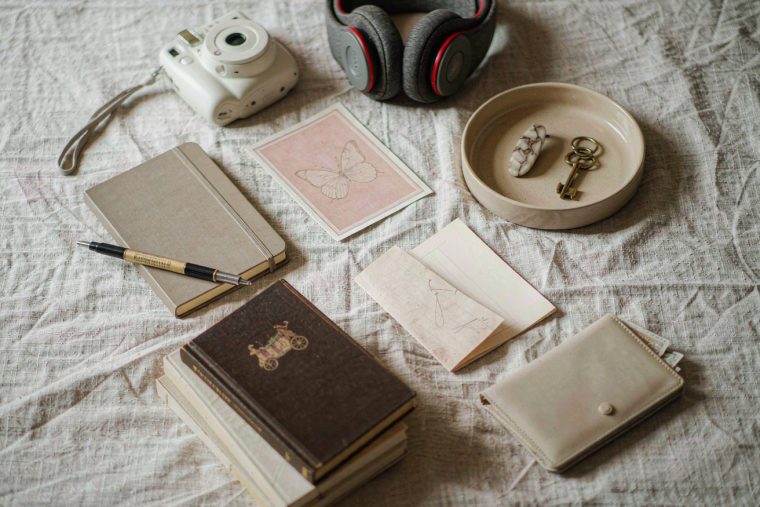
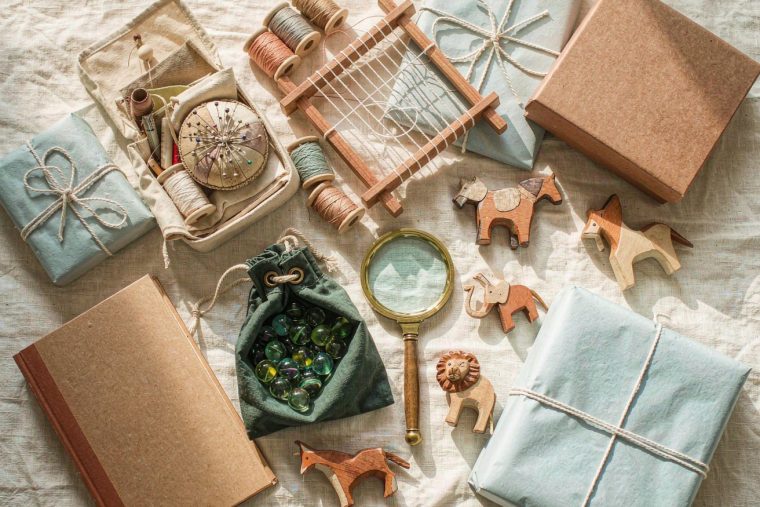
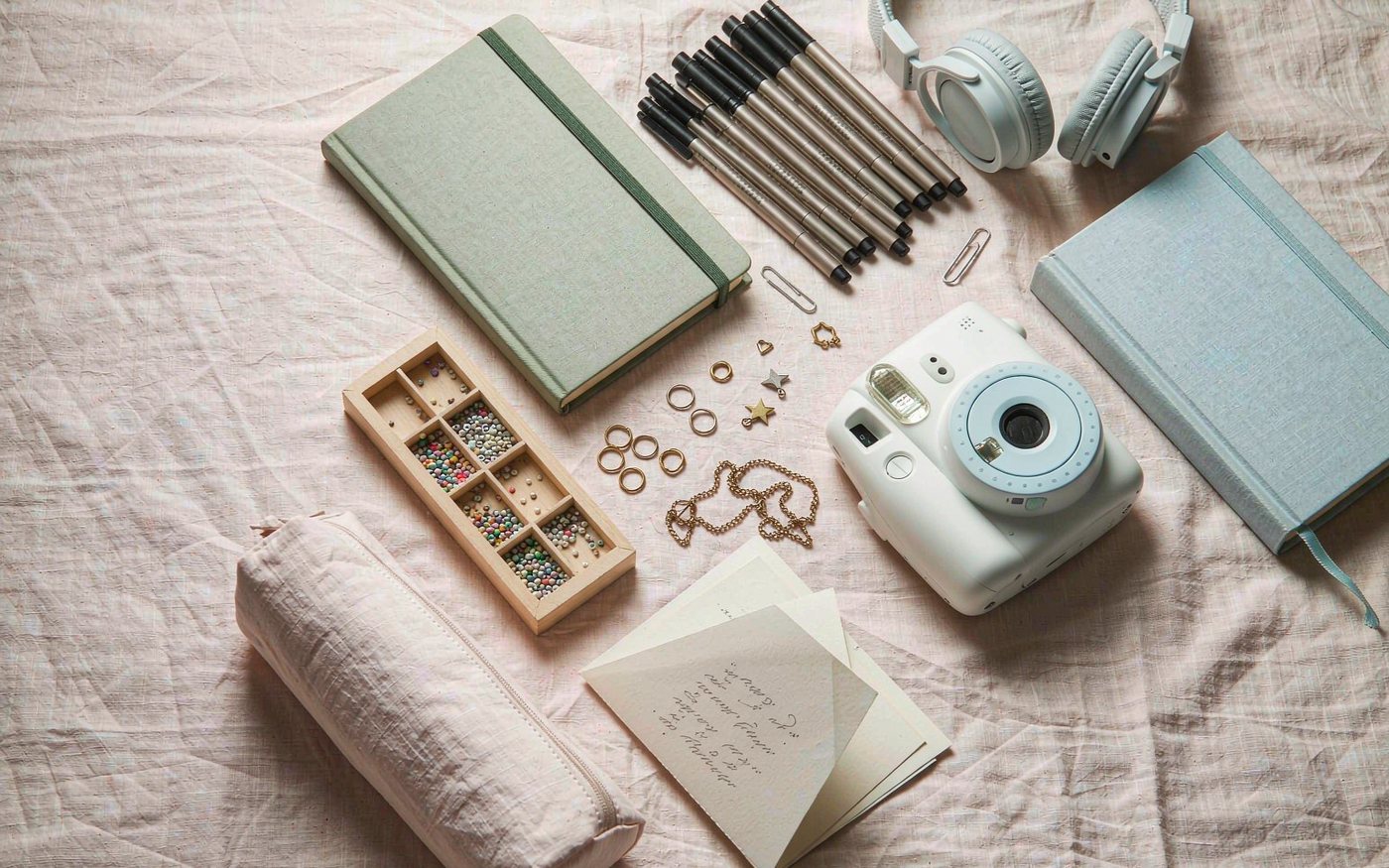
What works: a jewellery-making set with real findings rather than plastic beads, a sewing kit with actual fabric and a project book, embroidery or cross-stitch with a hoop small enough to finish, air-dry clay with proper tools, a print-making or stamp-carving kit, a decent set of drawing pens and a hardback sketchbook.
What to avoid: resin kits for this age. The two-part resins are sensitizers, the curing is not something a ten-year-old should manage unsupervised, and the finished pieces are the only part anyone photographs. Also avoid any kit where the box photo is more impressive than the contents — a common pattern in the craft aisle.
Things that are about a friendship
The most under-served category for this age and the one that most reliably produces delight. Ten-year-olds have a specific best friend, and a gift that acknowledges that is worth more than a bigger gift that does not.
What works: a two-person craft project (two of the same bracelet kit, one for each), letter-writing sets with real paper and envelopes, a shared journal that gets passed back and forth, matching small things that are not embarrassing, a photo-printing camera so the friendship has physical evidence, a two-player game that only works with two players.
The test: does it produce something they do together, or something they each own? The first is a better gift.
Writing, planning, and keeping secrets
Ten is peak journal age, and the reason is developmental rather than sentimental — she has an inner life she is not sharing with adults, and she needs somewhere to put it.
What works: a journal with a proper closure (a lock, an elastic, a wrap) and paper good enough to write on with a pen, a set of decent pens in colours, a planner or sticker planner if she is the organising type, a small lockable box, a noticeboard for her room with actual pins.
What to avoid: journals with prompts printed on every page. Half the appeal is the blankness.
Reading, at the stage she is actually at
Reading stage varies more at ten than at any other age — some children are on 300-page novels, some are still happiest with heavily illustrated books, and both are normal. If you do not know which, buy something that works either way.
What works: the next book in a series she is already reading (ask a parent, this is the single most reliable gift on this page), graphic novels, illustrated non-fiction about animals, space, or disasters, a big-format book of records or strange facts, and — genuinely underrated — a good-quality hardback she will keep rather than a paperback she will leave somewhere.
Building, engineering, and the stuff marketed to boys
If she builds, the correct move is to ignore the marketing entirely and buy the set. Standard brick systems, magnetic tiles, metal construction sets with real nuts and bolts, marble runs, snap-together circuits. These are the same products that work for a ten-year-old boy, and the reason they are filed on a different shelf is a marketing decision from the 1970s rather than a fact about children.
One caution specific to this category: piece count and age grade are the two numbers to check, and they should match her actual ability rather than her age. A set she can finish in two sittings is the right size; a set that takes three weekends alone is a box in a cupboard. Our guide to building toys that hold up like LEGO covers the compatibility question, which matters more than the brand.
Science and the observable world
Works best for the child who asks why, and fails badly for the child who does not — a chemistry set given to a child who wanted a horse is a lecture in a box.
What works: a real microscope with prepared slides (not a toy scope that magnifies blur), a rock tumbler if there is somewhere noisy to run it, crystal-growing kits, a decent pair of binoculars, a star map plus a red-light torch, a proper insect or pond-dipping kit, a weather station.
What to avoid: kits where the “experiment” is a demonstration the adult performs. The test is whether she can run it again tomorrow without help.
Technology that does something
At ten, tech works as a tool rather than as a toy. The gifts that get used are the ones that extend something she already does.
What works: an instant or compact camera if she takes photos, a pair of headphones that fit properly for the car and for homework, a tablet if the family has decided on one — our kids’ tablet and kids’ camera guides cover the checks that matter — and a beginner coding robot only if she has shown interest, because the ones that fail are the ones bought as a hint.
One rule for anything with an app: check that the company is still trading and the app was updated this year before you buy. A connected toy whose servers are switched off becomes a plastic brick with a speaker in it — that is exactly what happened with Moxie, and it is why this site checks the service before it checks the spec.
Moving
The most reliable way to compete with a screen, because it is the only category that is genuinely better than the screen. Ten is the age where a child commits to a physical thing and gets visibly better at it within a season.
What works: roller skates or ice skates in her actual size, a scooter upgrade, a bike in the right frame size (not a size up “to last”), a climbing or gymnastics class, a decent basketball or netball, a skipping rope that is not a toy, and — if the family will use it — a trampoline, which is the highest cost-per-hour item in this entire article if it gets used and the worst purchase in it if it does not.
Her room, her taste
Frequently dismissed as not being a real present, and consistently one of the most appreciated categories at this age, because it is the only one where she is in charge.
What works: a shelf or a pinboard she installs herself, a jewellery box or a small set of boxes, a mirror, a lamp or a strip of lights, a poster or print she chooses (give a budget and a website rather than a framed picture you picked), a beanbag, bedding in a pattern she chose.
What to avoid: anything that is really a decoration for the parent’s house. If she did not choose it, it is furniture, not a gift.
What to skip
Multi-step skincare and anything with an active ingredient. Covered above. This is the one category where a well-meant gift can cause a problem rather than just disappointment.
Doll-and-accessory sets aimed at five-year-olds. If she has moved on, buying back into it reads as not paying attention. If she has not moved on, that is fine — but then buy the thing she actually plays with rather than the version marketed at her age.
The pink version of an engineering toy with fewer parts. Check the piece count before you check the colour.
Gift sets that are mostly packaging. Common in bath, stationery, and craft. Look at what is inside the box in the product photos; if you cannot tell, that is the answer.
Anything with a button battery in a compartment she can open, and small high-powered magnets. These are the two items that send children to hospital rather than to their rooms. A swallowed coin cell can burn tissue within a couple of hours, and two magnets that find each other across a loop of intestine cause damage that does not show up for days.
Unlabelled slime, putty, and “mystery” compounds. No ingredient list means no way to know what is on her hands, and no manufacturer address means nobody to ask.
Surprises about her appearance. Clothes, haircuts, and makeup chosen for her rather than with her are the gifts most likely to be received politely and never used. A gift card to a shop she likes is a better gift than a garment she did not choose.
The budget ladder
Under $25. Consumables done well: a proper sketchbook, decent pens, a journal with a closure, a two-player card game, a book in a series, hair accessories she chose. This band is stronger than people expect.
$25–$60. The sweet spot. A jewellery-making set with real findings, a sewing kit, a mid-size building set, a decent pair of headphones, a skate upgrade, a good hardback and a small consumable together.
$60–$150. One substantial thing rather than three medium ones: a compact camera, a scooter, a bike, a microscope, a tablet if the family is buying one, a term of a class she wants to take.
Above $150. At this level the decision is about whether the family wants a shared asset, and the two failure modes are buying a subscription-dependent product at the top of the market and buying for the adult’s enthusiasm rather than the child’s.
One structure that works at every level: one thing she can get good at, one thing she can do with a friend, and one thing that gets used up. That combination beats a larger pile at the same total, and it produces a better morning.
If you do not know her interests
Grandparents, relatives, and anyone shopping from a texted list. Two answers that work, and one that works better than people expect.
A book and a consumable. The next book in a series she is reading, plus pens or a sketchbook. Low risk, clearly thoughtful, and it does not require knowing her size or her collection.
Something for her room, with the receipt. A lamp, a set of boxes, a pinboard. The receipt matters — it turns a guess into a choice.
Money, given well. At ten this is already welcome, and it stops being awkward if it comes with a small object so there is something to unwrap. A gift card to a shop she can actually reach, rather than one that requires a car journey, is the version that works.
What does not work for a child you do not know: anything sized, anything that depends on an existing collection, anything with an app, and anything that requires an adult to supervise the first hour.
FAQ
What is a good gift for a 10 year old girl who has everything?
Consumables, upgrades, and experiences. A better version of something she already uses daily, a craft kit in a grade above what she owns, a book in a series she is mid-way through, or a day out with one specific friend. The reliable category is “the good version of a thing she already has.”
Is it OK to buy a building set or a science kit for a girl?
Yes, and the marketing is the only reason this is a question. Compare the piece count and the mechanism rather than the colour of the box — the girls’ version of the same toy is frequently the same concept with fewer parts, which is the thing worth avoiding rather than the category.
Should a 10 year old have a skincare routine?
Not a multi-step one, and nothing with an active ingredient. Paediatric dermatologists consistently point out that children’s skin does not need exfoliating acids or retinoids, and that products formulated for adults can irritate a child’s skin barrier. A mild cleanser and a lip balm are sufficient; anything sold as a “routine” is marketing.
How much should you spend on a gift for a 10 year old girl?
There is no correct number, but the best value sits between $25 and $60. Above that you are usually paying for brand or for an adult’s idea of impressive rather than for a better gift.
What are good gifts for a 10 year old girl who is not into crafts?
Physical things she can get better at, technology that extends something she already does, games that need a second player, and anything for her room that she chose herself. The craft cluster is the easiest to buy for, not the only one that works.
Are tablets and phones reasonable gifts at ten?
A shared family tablet is a reasonable tool at ten; a personal phone is a different decision, and it belongs to the family rather than to the gift buyer. If a tablet is the gift, the setup and the rules are part of the gift — see our piece on whether smart toys are safe for the questions to ask before a connected device goes into a house.
When should you buy?
Late October to mid-November, while stock is complete. By the second week of December the popular items in the $25–$60 band are gone, and after about 18 December you are choosing from what is physically in a shop near you.
How we put this together
This is a category guide built from research and published standards rather than a set of hands-on product tests, and it should be read that way. Where a claim rests on a regulation, a study, or a documented failure pattern — the price gap measured by New York City’s consumer affairs office, the small-parts and magnet rules, button-battery injuries, dermatological guidance on children’s skincare — the source is named rather than dressed up as experience we do not have. Where we describe how a category behaves over months, that reflects use in our own households and in conversations with families.
We do not publish star ratings, because a number implies a measurement we did not take. Our standard and the four labels we use for verdicts are on the how we test page, and corrections are dated rather than quietly edited.
For the sibling piece, the ten-year-old boys guide covers the same age from a different angle, the gifts for 8 year old girls guide covers the band below, and the Christmas gifts for kids hub lays out every age band from one to twelve. If you are also filling a stocking, the stocking stuffers guide is the right place for the small things, and the Gift Guides section has the rest of the season.